Game Info
↑ Back to top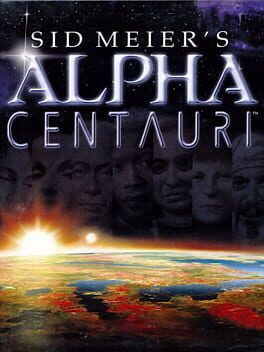

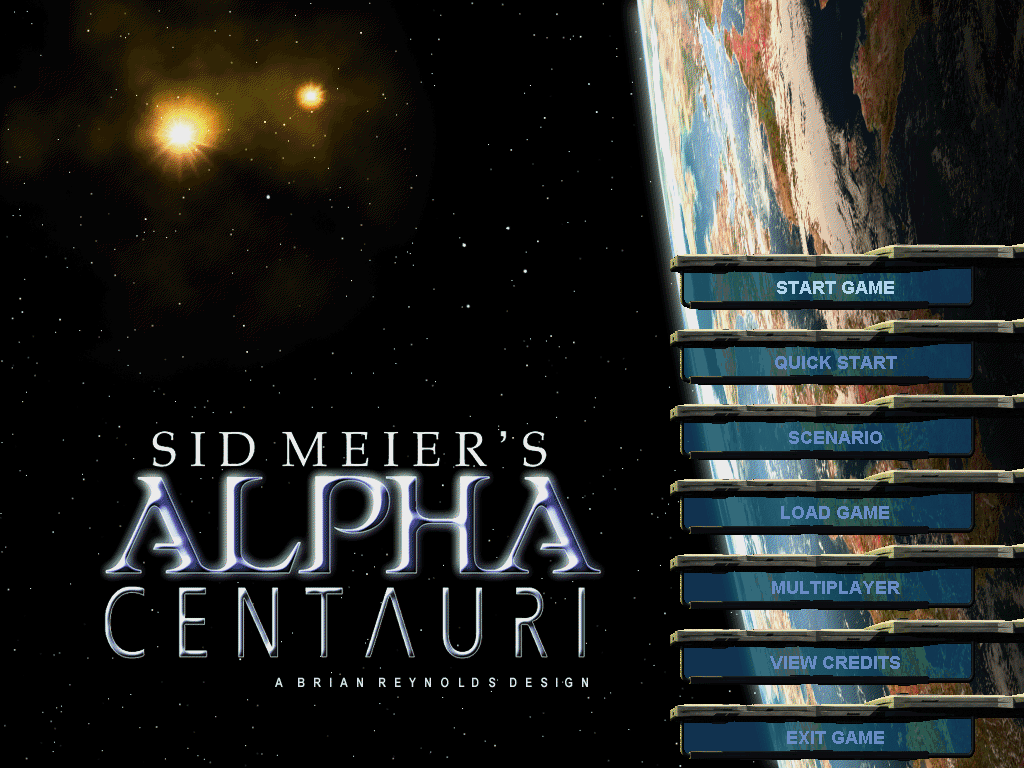
Sid Meier's Alpha Centauri
Series:
Genres:
Themes:
Perspectives:
Game Modes:
Overview
↑ Back to topDescription from Steam STEAM
Mankind begins its most monumental task: the colonization of space. A crew of internationally renowned scientists and security strategists, with wide-ranging convictions and diverse ethics, embarks on a mission that will change the world. One Planet. Seven unique factions. Which will you lead? Each faction has its own agenda, each leader a final goal. You must play to each strength and exploit each hidden weakness in your quest to rule the future. Key features: Great spin-off of the legendary Civilization series, in a refreshing sci-fi setting Design your own units. Balance their speed, power, and toughness to suit your current tactical needs Seven factions to chose from, each with its own artificial intelligence model that creates a very suggestive feeling that you’re up against real people
Description from IGDB IGDB
Wikipedia Description WIKIPEDIA
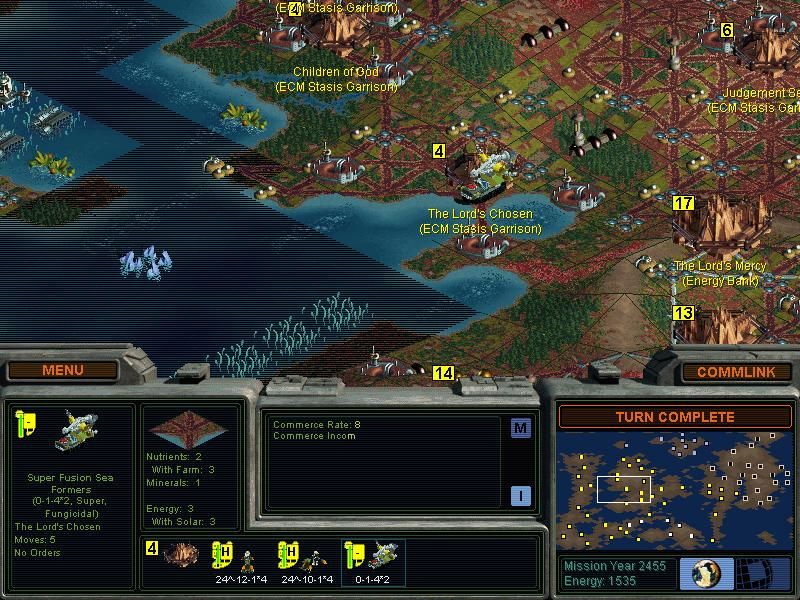
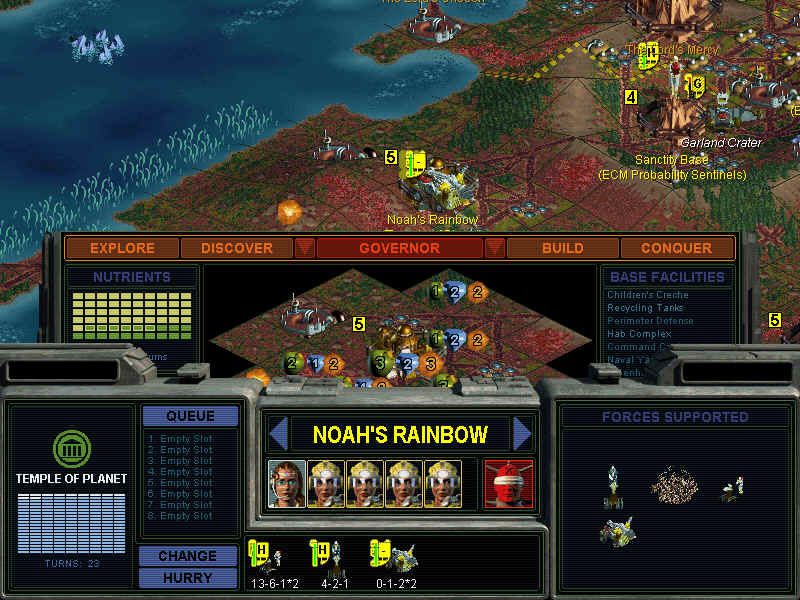
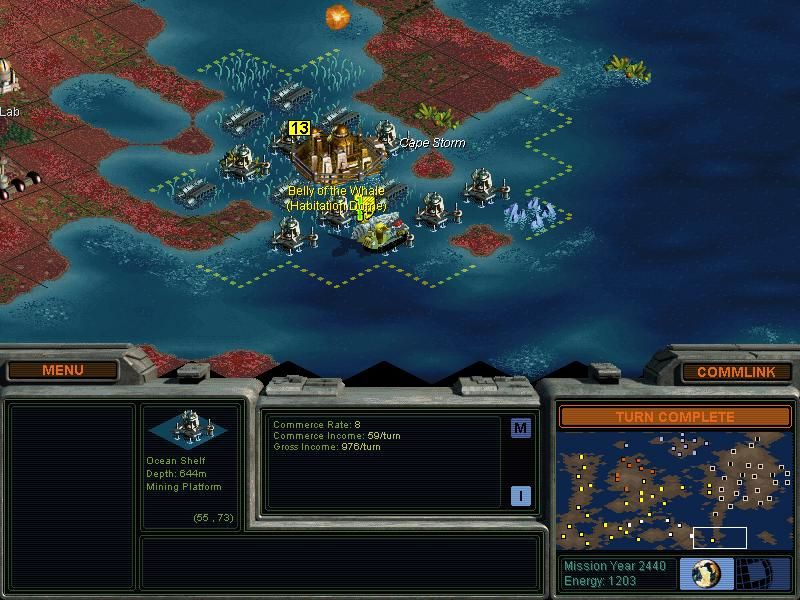
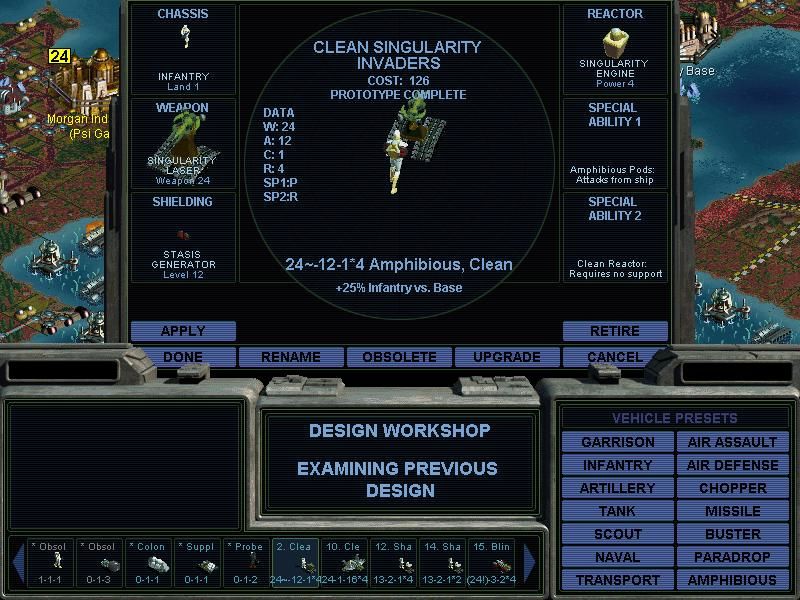
Alpha Centauri, a turn-based strategy game with a hard science fiction setting, is played from an isometric perspective. Many game features from Civilization II are present, but renamed or slightly tweaked: players establish bases (Civilization II's cities), build facilities (buildings) and secret projects (Wonders of the World), explore territory, research technology, and conquer other factions (civilizations). In addition to conquering all non-allied factions, players may also win by obtaining votes from three-quarters of the total population (similar to Civilization IV's Diplomatic victory), "cornering the Global Energy Market", completing the Ascent to Transcendence secret project, or for alien factions, constructing six Subspace Generators. The main map (the upper two-thirds of the screen) is divided into squares, on which players can establish bases, move units and engage in combat. Through terraforming, players may modify the effects of the individual map squares on movement, combat and resources. Resources are used to feed the population, construct units and facilities, and supply energy. Players can allocate energy between research into new technology and energy reserves. Unlike Civilization II, new technology grants access to additional unit components rather than pre-designed units, allowing players to design and re-design units as their factions' priorities shift. Energy reserves allow the player to upgrade units, maintain facilities, and attempt to win by the Global Energy Market scenario. Bases are military strongpoints and objectives that are vital for all winning strategies. They produce military units, house the population, collect energy, and build secret projects and Subspace Generators. Facilities and secret projects improve the performance of individual bases and of the entire faction. In addition to terraforming, optimizing individual base performance and building secret projects, players may also benefit their factions through social engineering, probe teams, and diplomacy. Social engineering modifies the ideologically based bonuses and penalties forced by the player's choice of faction. Probe teams can sabotage and steal information, units, technology, and energy from enemy bases, while diplomacy lets the player create coalitions with other factions. It also allows the trade or transfer of units, bases, technology and energy. The Planetary Council, similar to the United Nations Security Council, takes Planet-wide actions and determines population victories. In addition to futuristic technological advances and secret projects, the game includes alien life, structures and machines. "Xenofungus" and "sea fungus" provide movement, combat, and resource penalties, as well as concealment for "mind worms" and "spore launchers". Immobile "fungal towers" spawn native life. Native life, including the seaborne "Isles of the Deep" and "Sealurks" and airborne "Locusts of Chiron", use psionic combat, an alternate form of combat which ignores weapons and armor. Monoliths repair units and provide resources; artifacts yield new technology and hasten secret projects; landmarks provide resource bonuses; and random events add danger and opportunity. Excessive development leads to terraforming-destroying fungus blooms and new native life. Alpha Centauri provides a single player mode and supports customization and multiplayer. Players may customize the game by choosing options at the beginning of the game, using the built-in scenario and map editors, and modifying Alpha Centauri's game files. In addition to a choice of seven (or 14 in Alien Crossfire) factions, pre-game options include scenario game, customized random map, difficulty level, and game rules that include victory conditions, research control, and initial map knowledge. The scenario and map editors allow players to create customized scenarios and maps. The game's basic rules, diplomatic dialog, and the factions' starting abilities are in text files, which "the designers have done their best to make it reasonably easy to modify..., even for non-programmers." Alpha Centauri supports play by email ("PBEM") and TCP/IP mode featuring simultaneous movement, and introduces direct player-to-player negotiation, allowing the unconstrained trade of technology, energy, maps, and other elements.
About Sid Meier's Alpha Centauri
Sid Meier's Alpha Centauri is a Base Building, Built-in Editors, Strategy, Turn-based, Turn-based strategy (TBS) game released in 1999 developed by Firaxis Games that offers Multiplayer, Single player gameplay from a bird view / isometric, first person perspective playable on Linux, Mac, PC (Microsoft Windows) with 61 user ratings averaging 92.1/100. The game explores themes like 4X (explore, expand, exploit, and exterminate), Procedural Generation, Science fiction. If you enjoy Sid Meier's Alpha Centauri, you might also like similar games in our database of 45,000+ titles.
Basic Info
Details
↑ Back to topAdditional Information
Платформы 3
Genres 5
Themes 3
Player Perspectives 2
Game Modes 2
Companies
↑ Back to topDevelopers
Firaxis Games
No description available
Publishers
Aspyr Media
No description available
Electronic Arts
No description available
Loki Software
No description available
Keywords
↑ Back to topScreenshots
↑ Back to top
Similar Games
↑ Back to top
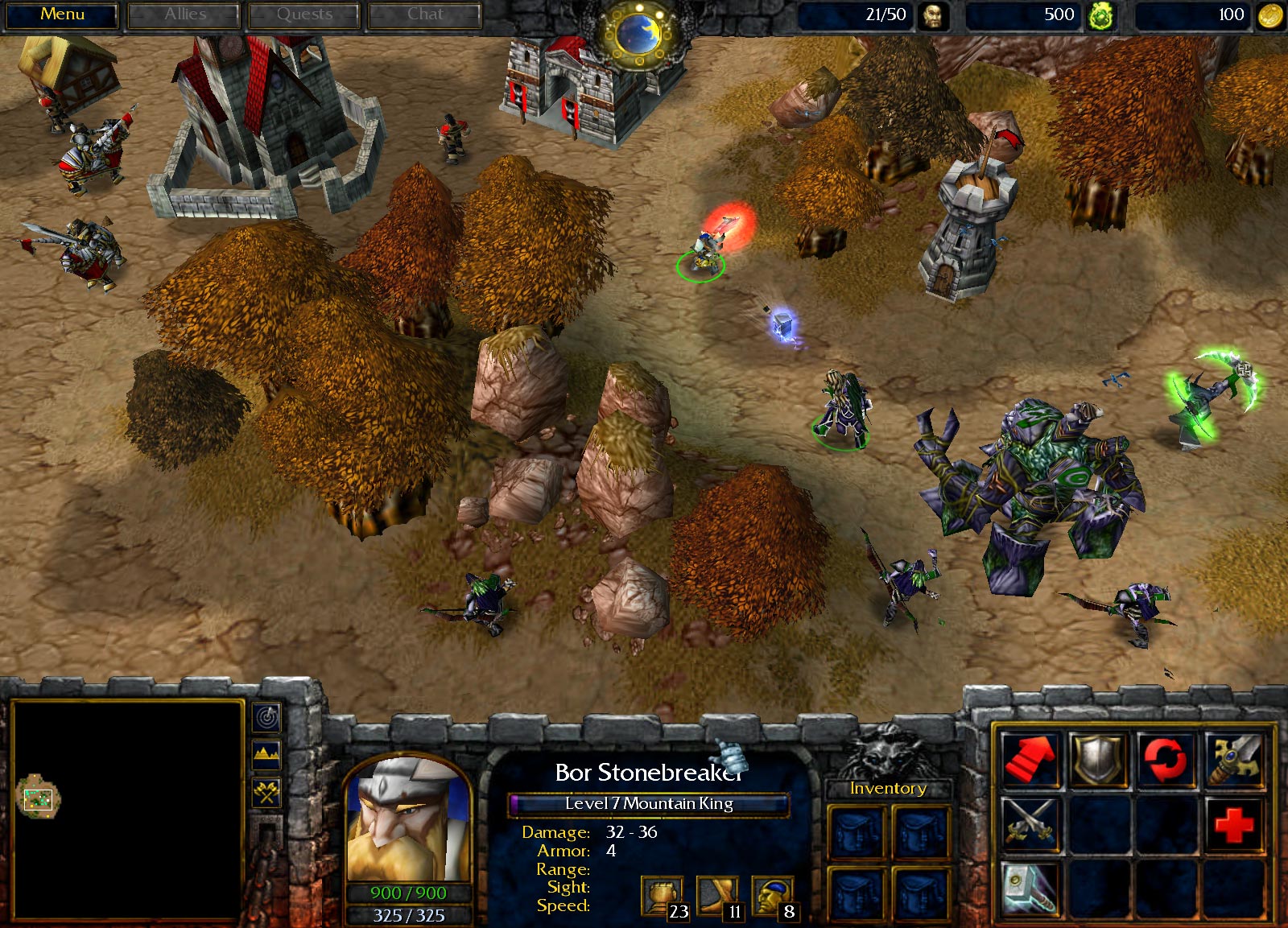
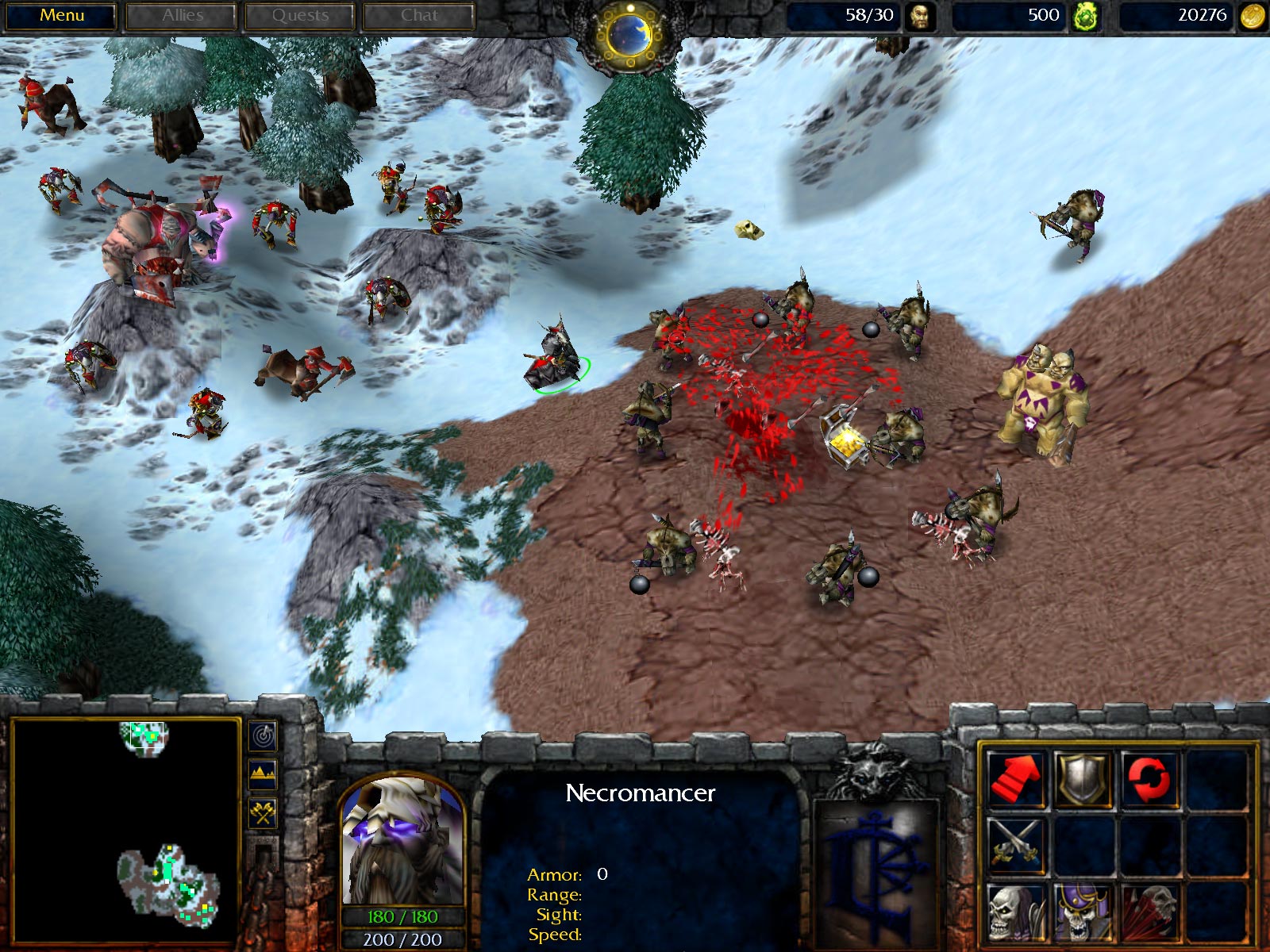
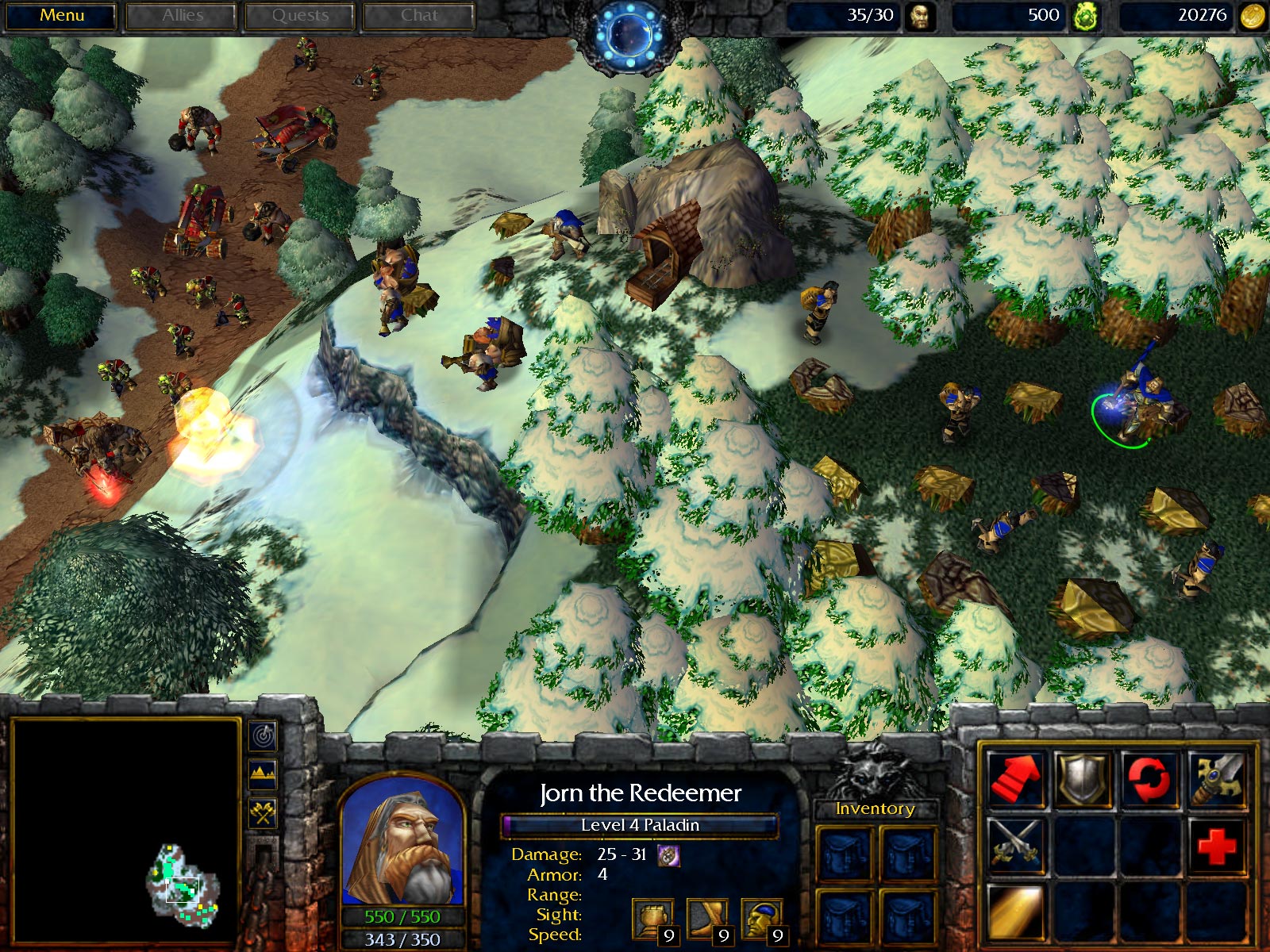
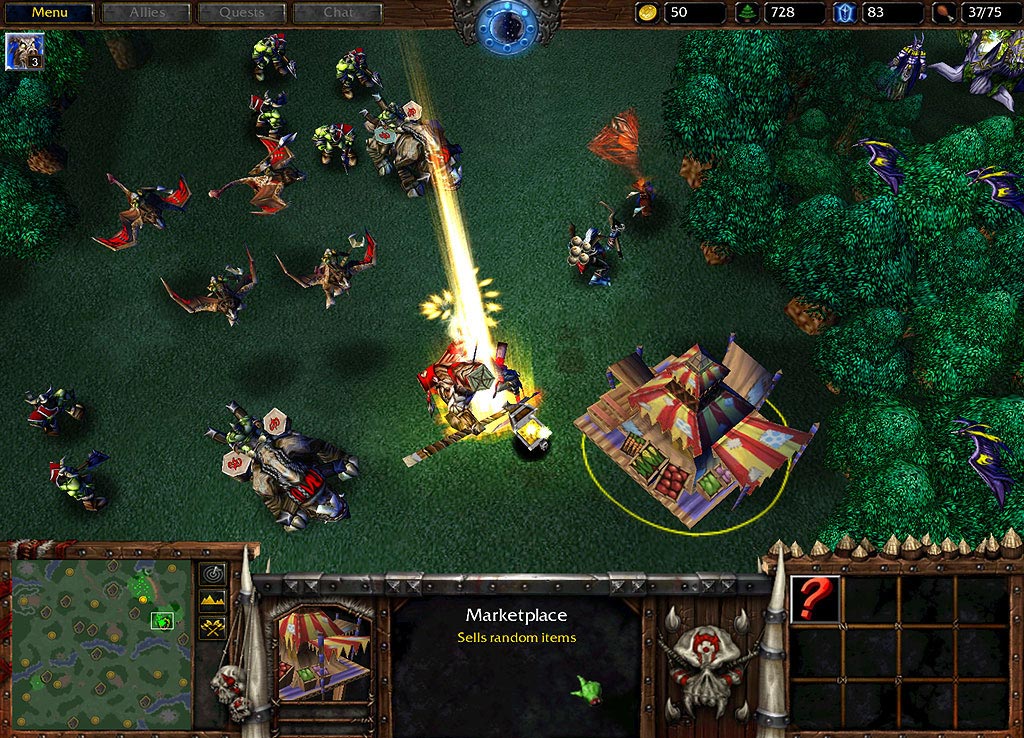
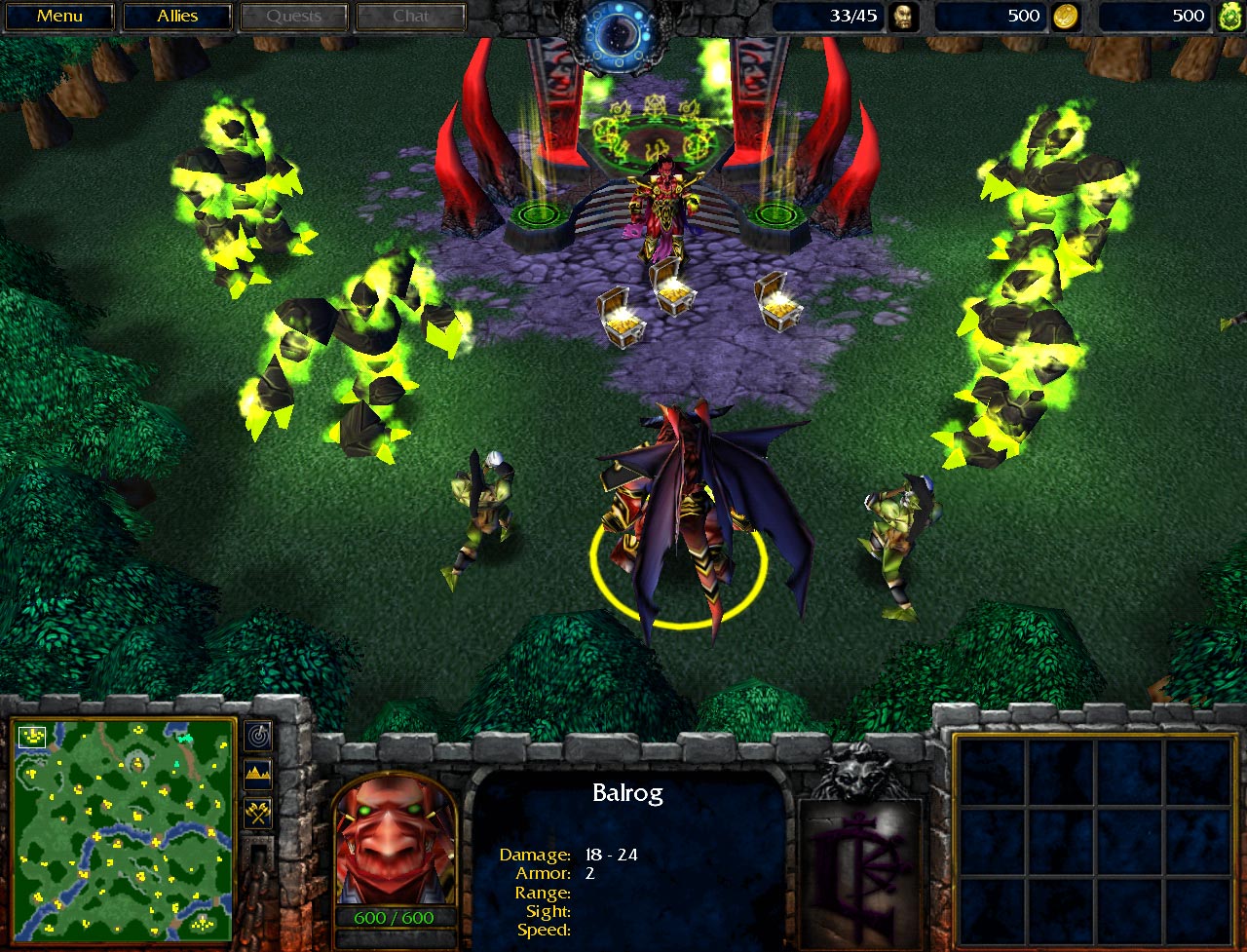

Warcraft III: Reign of Chaos

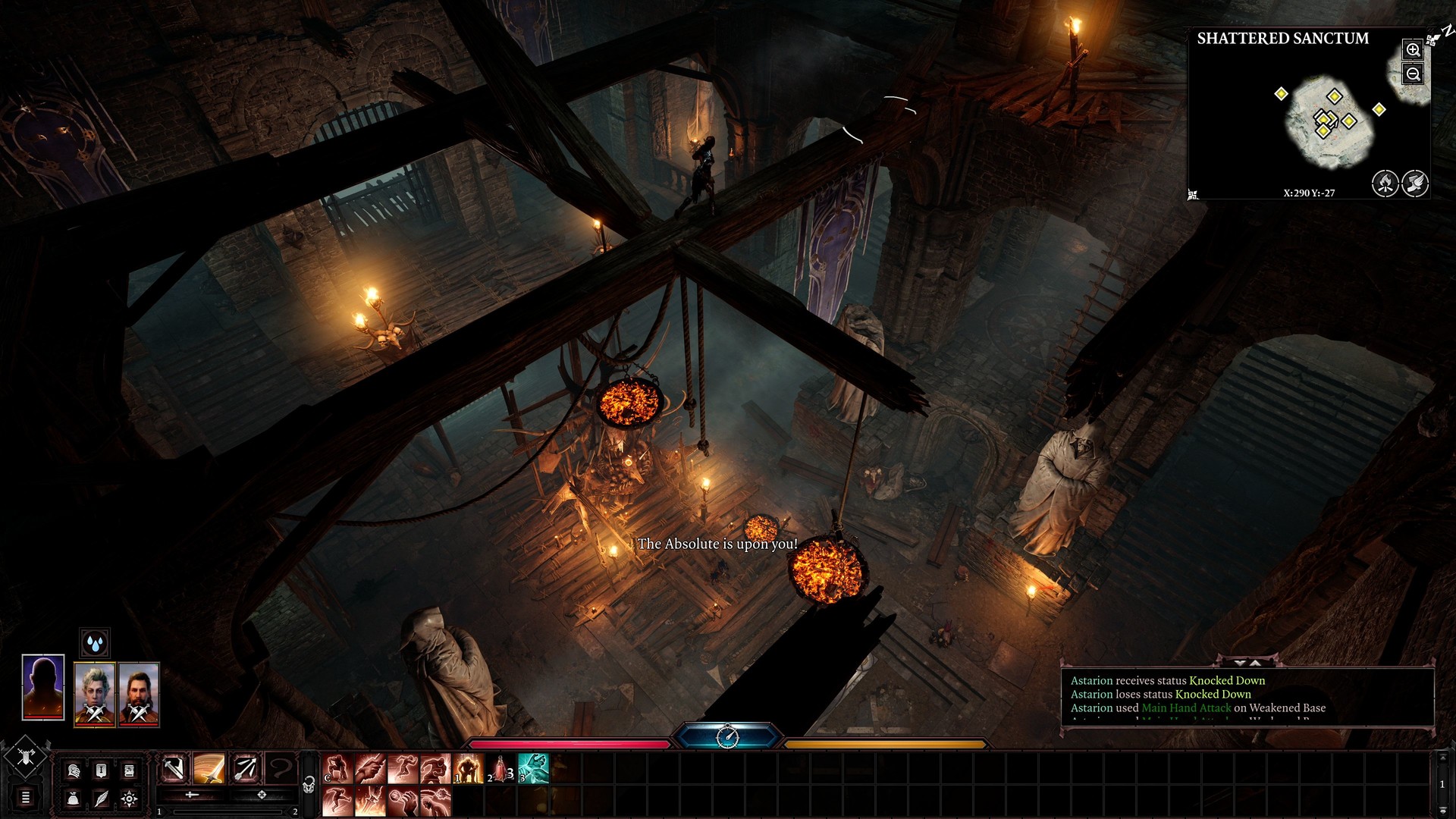
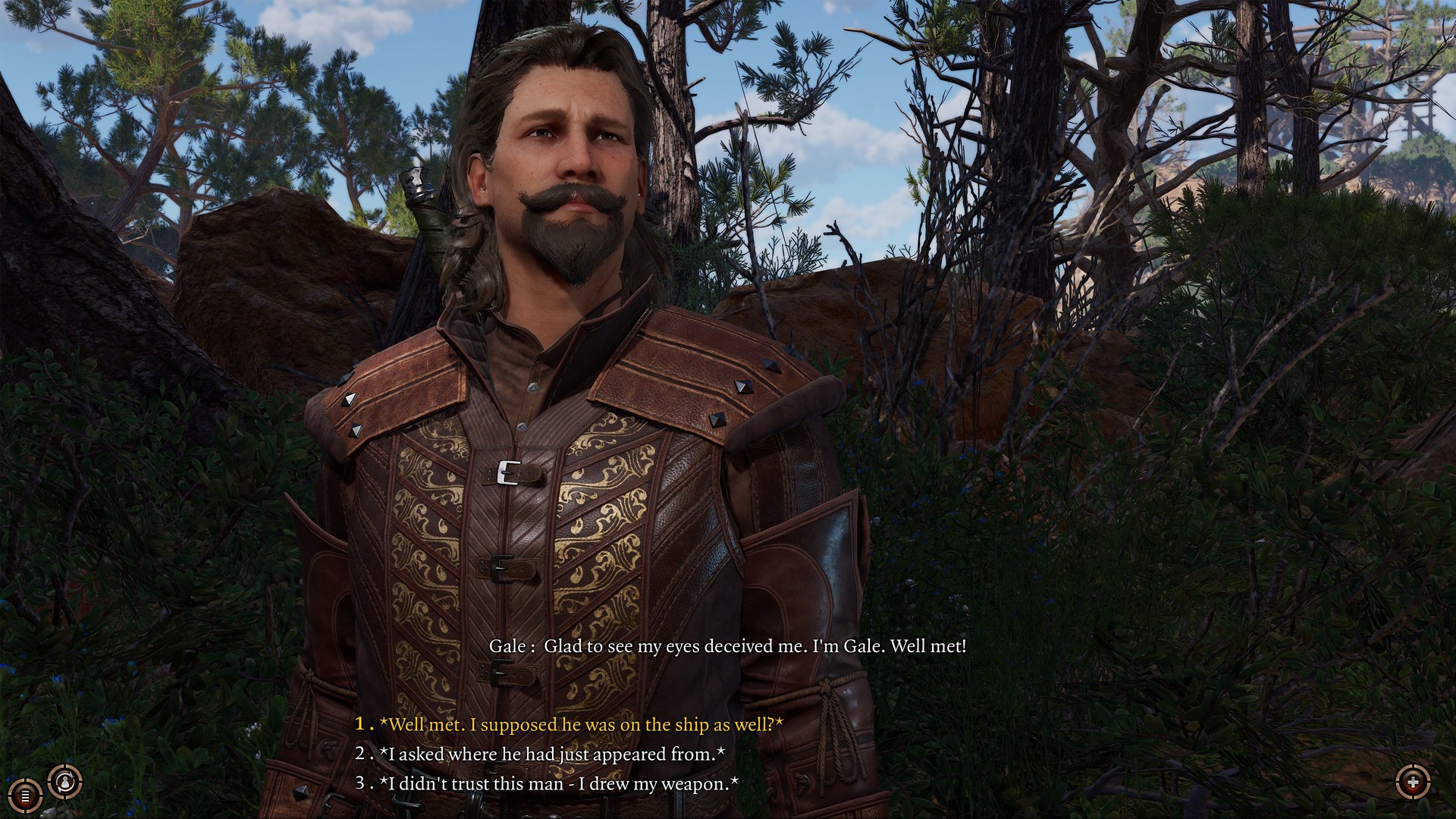
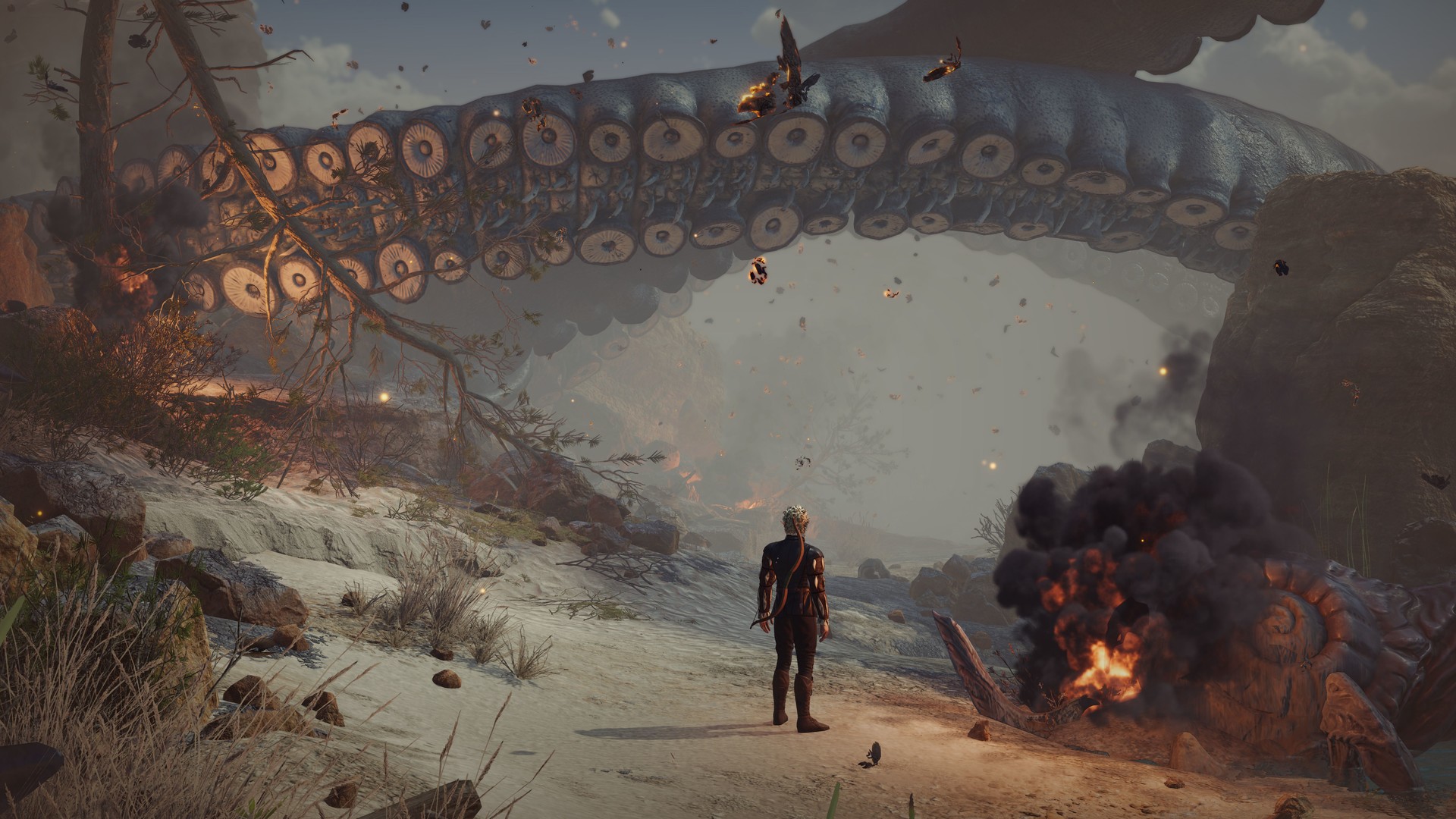
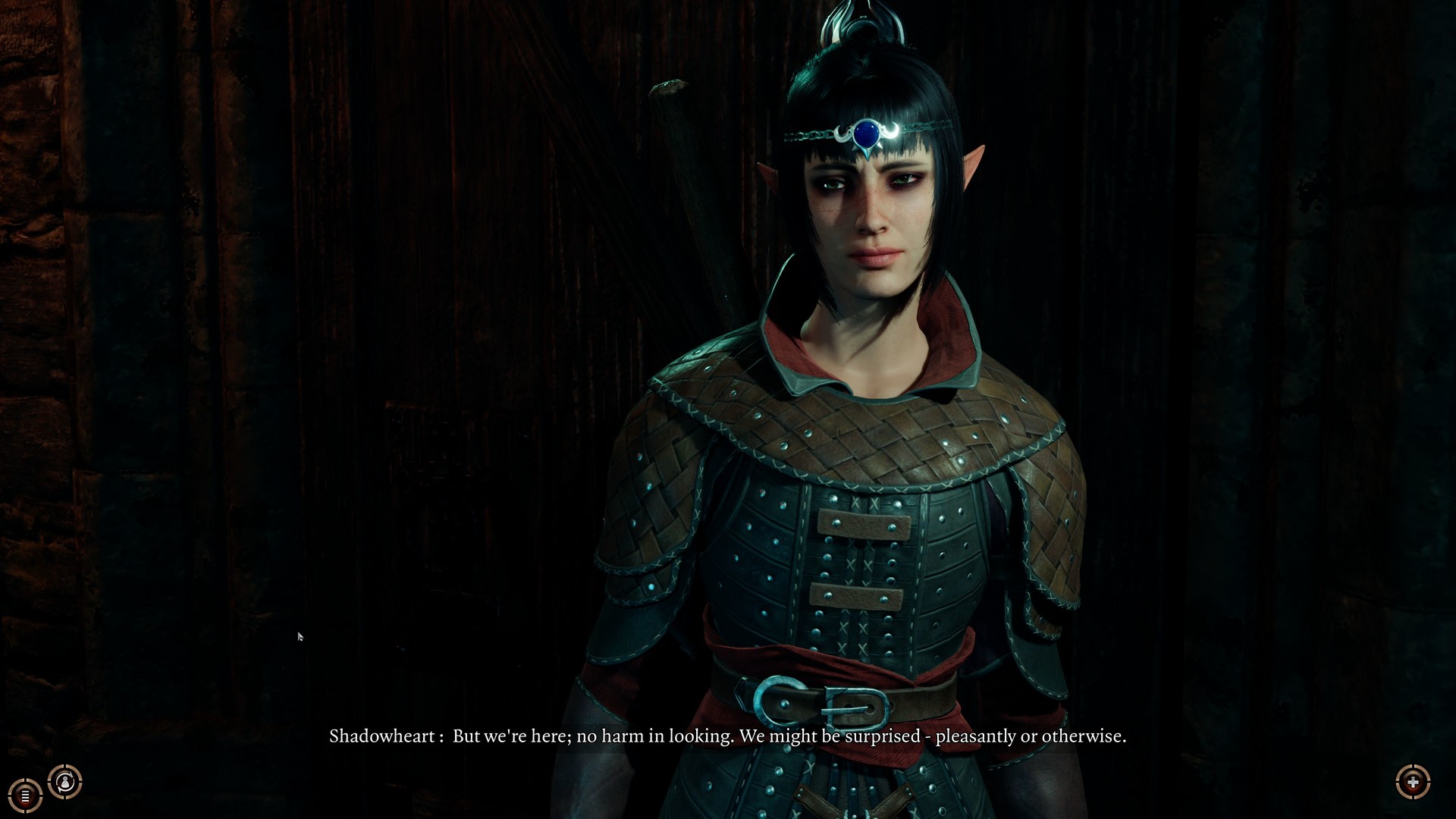
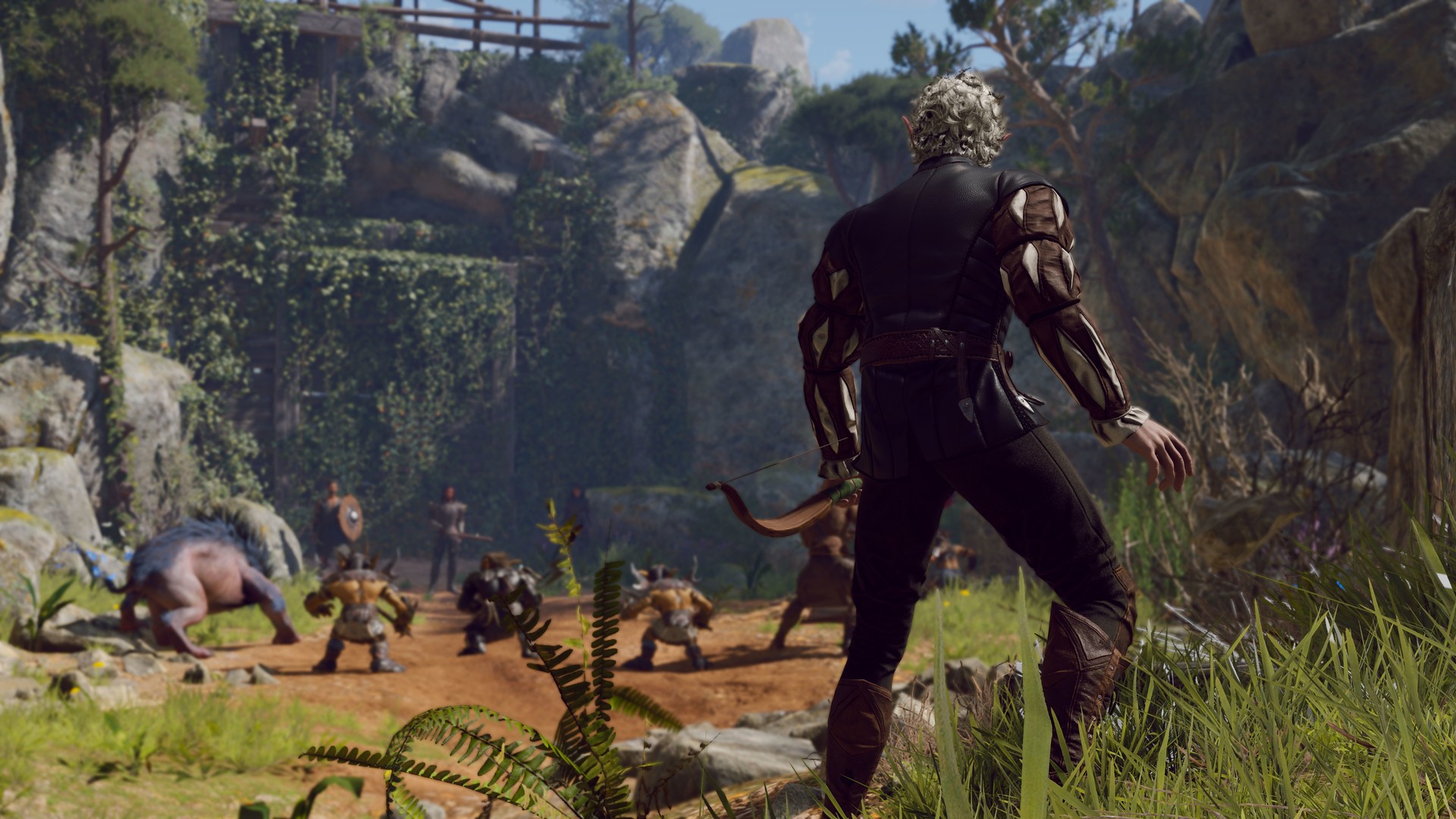

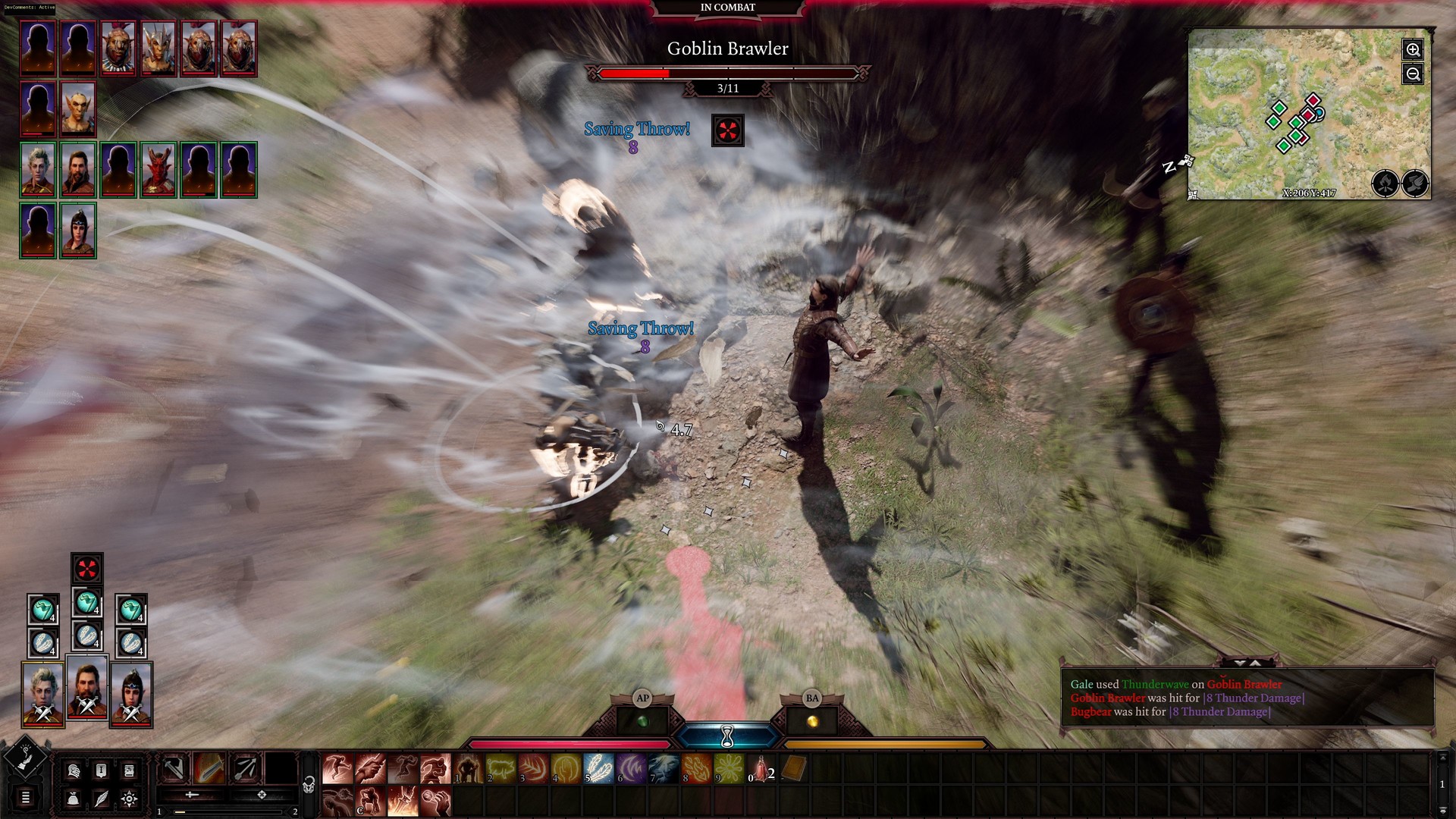

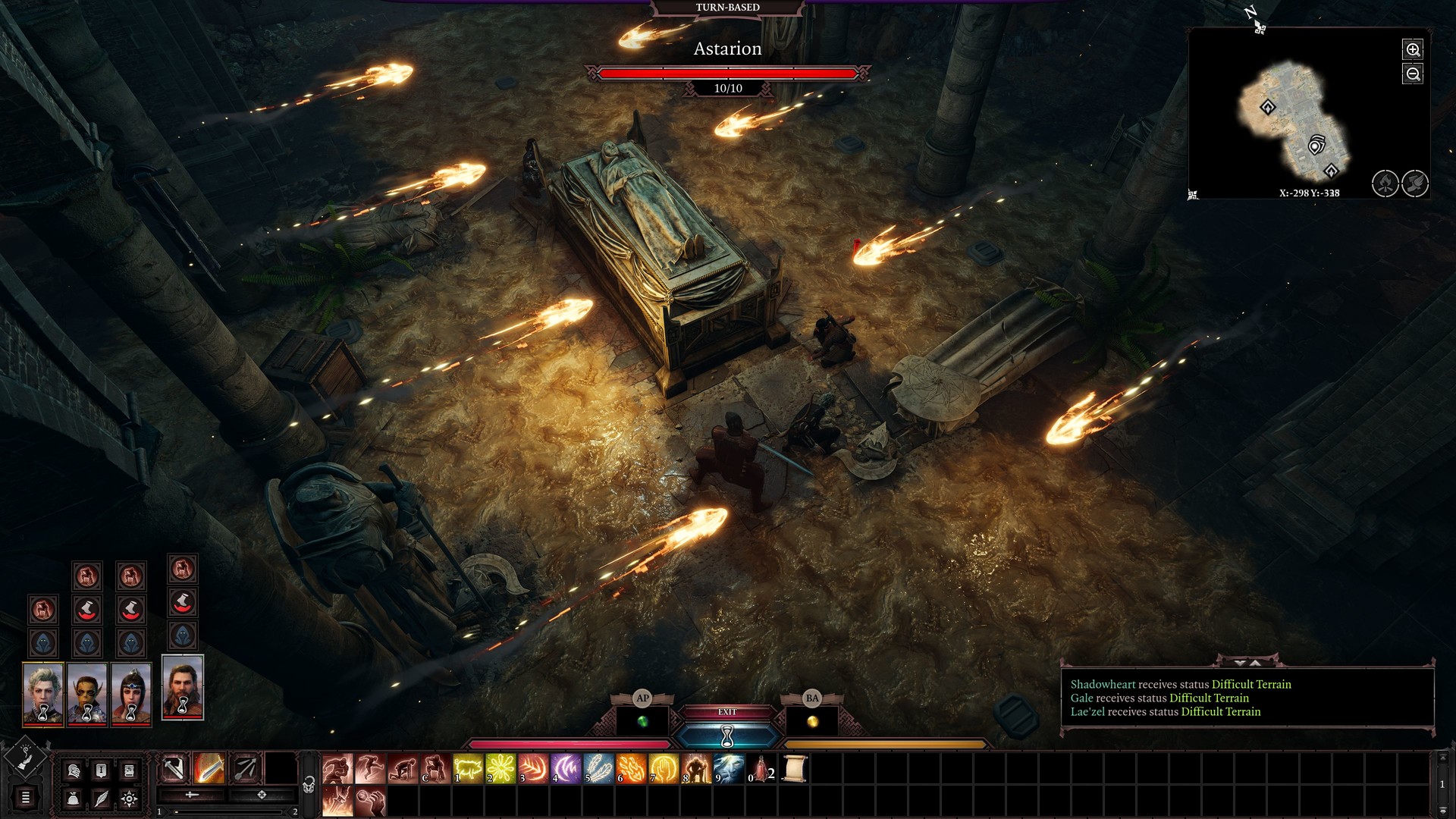


Baldur's Gate III
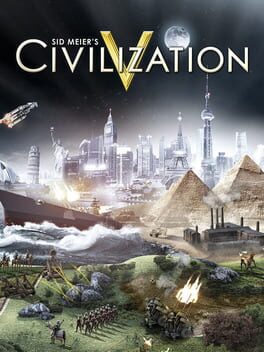

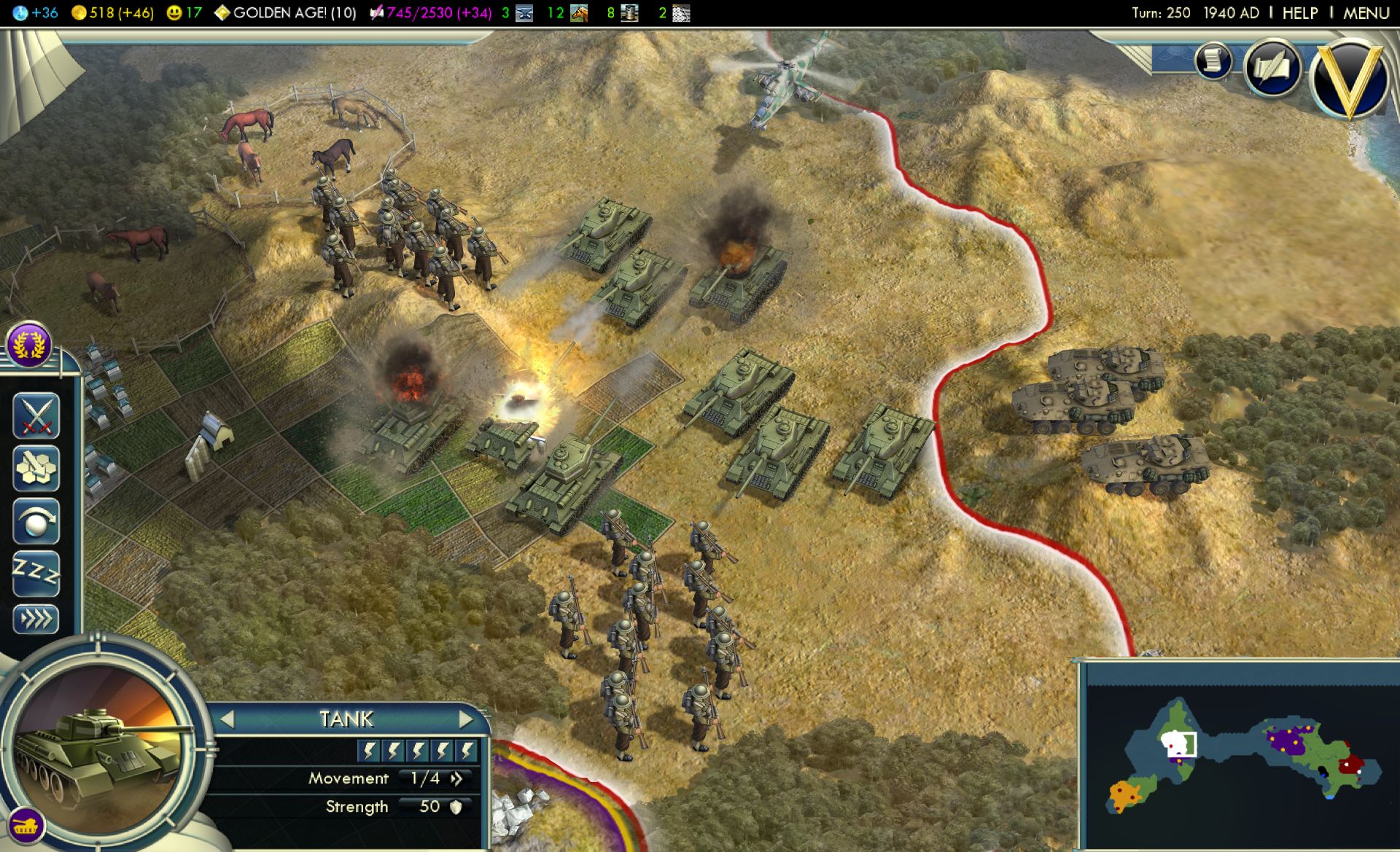
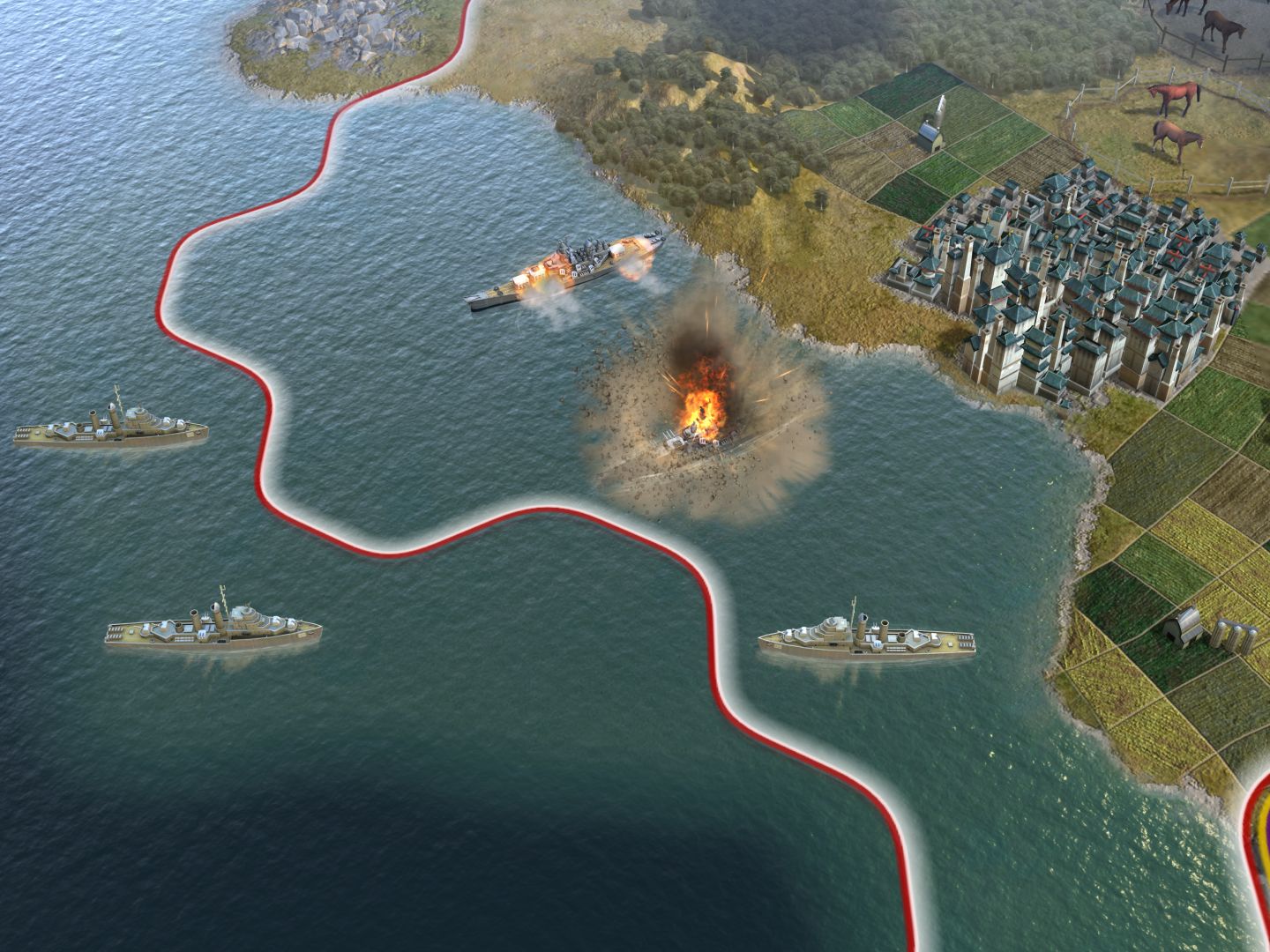
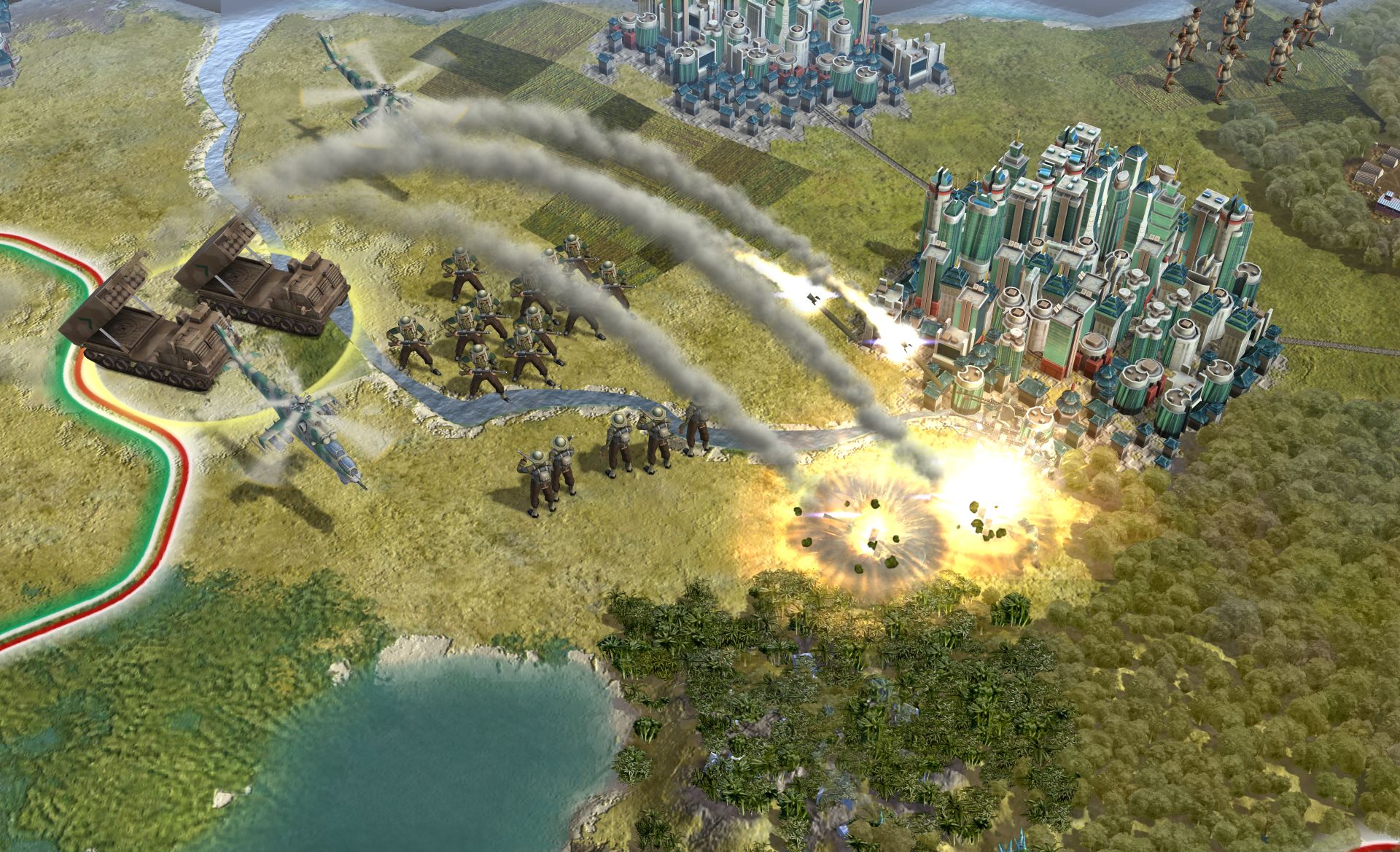
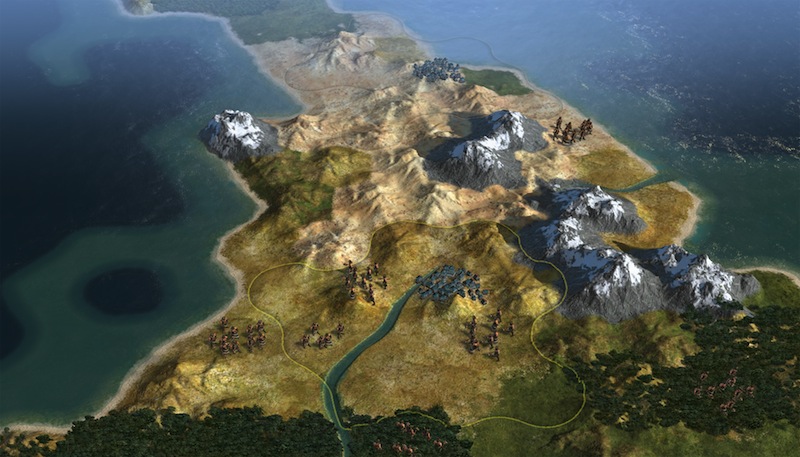

Sid Meier's Civilization V

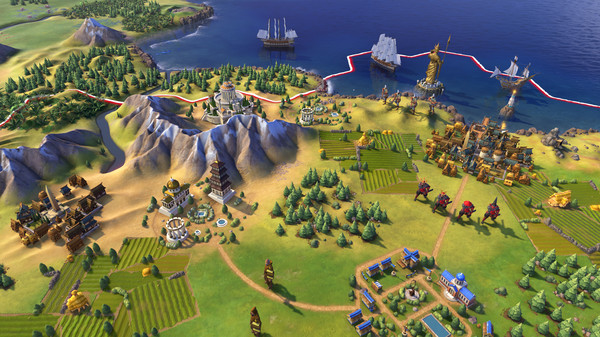
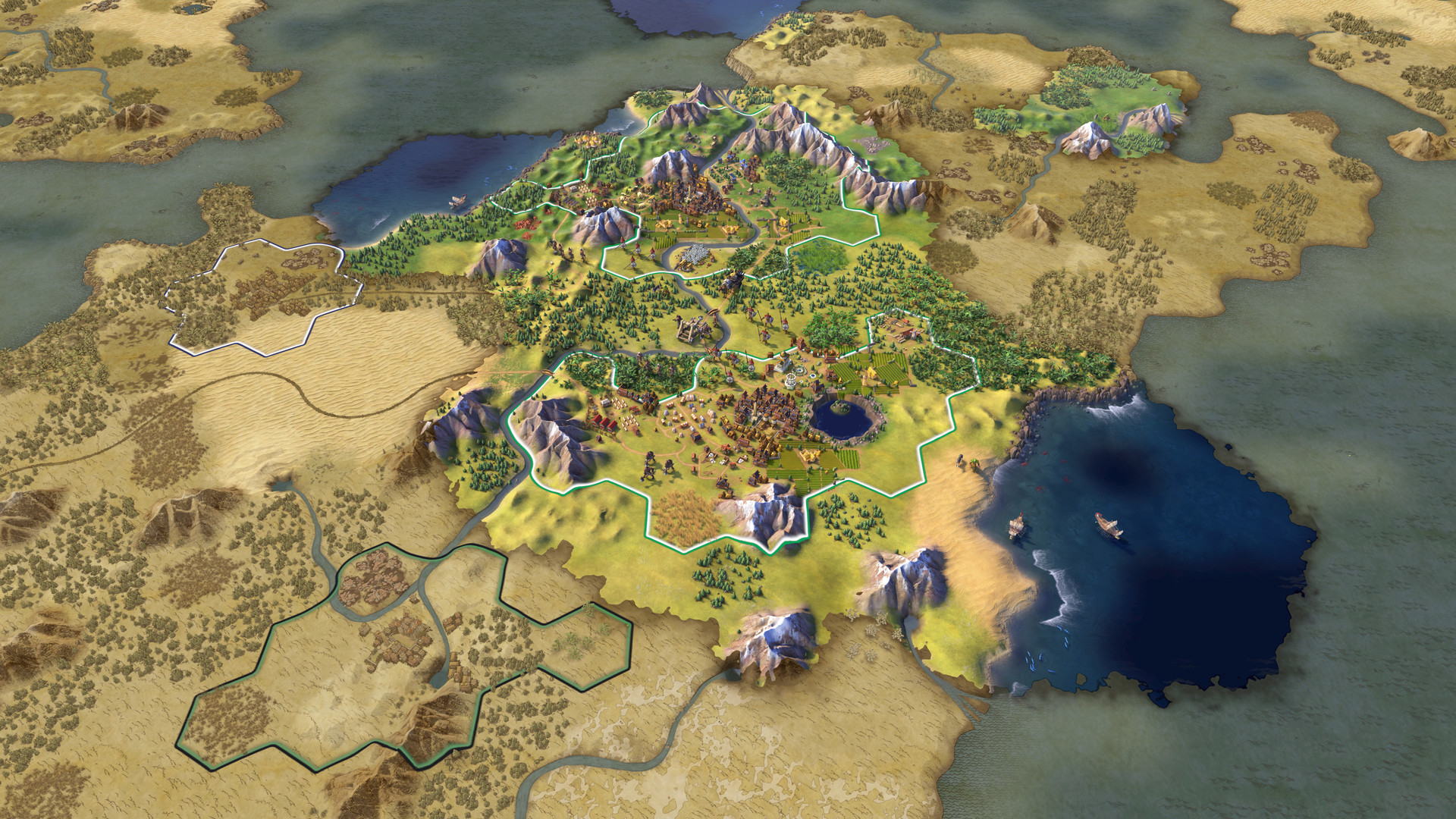


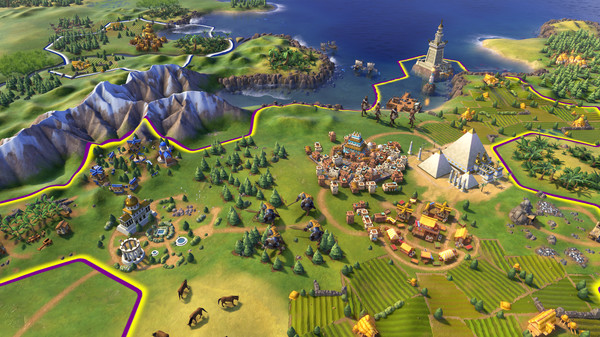

Sid Meier's Civilization VI



XCOM: Enemy Unknown



Among Us


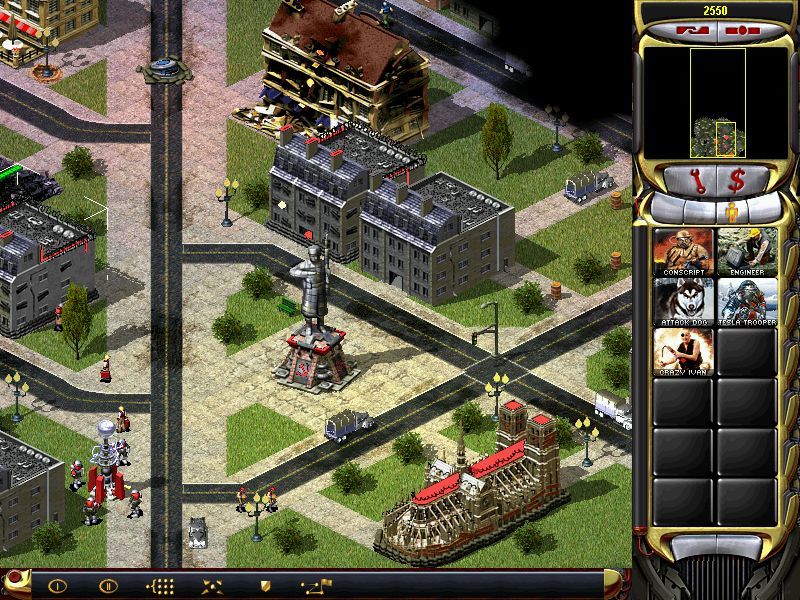

Command & Conquer: Red Alert 2

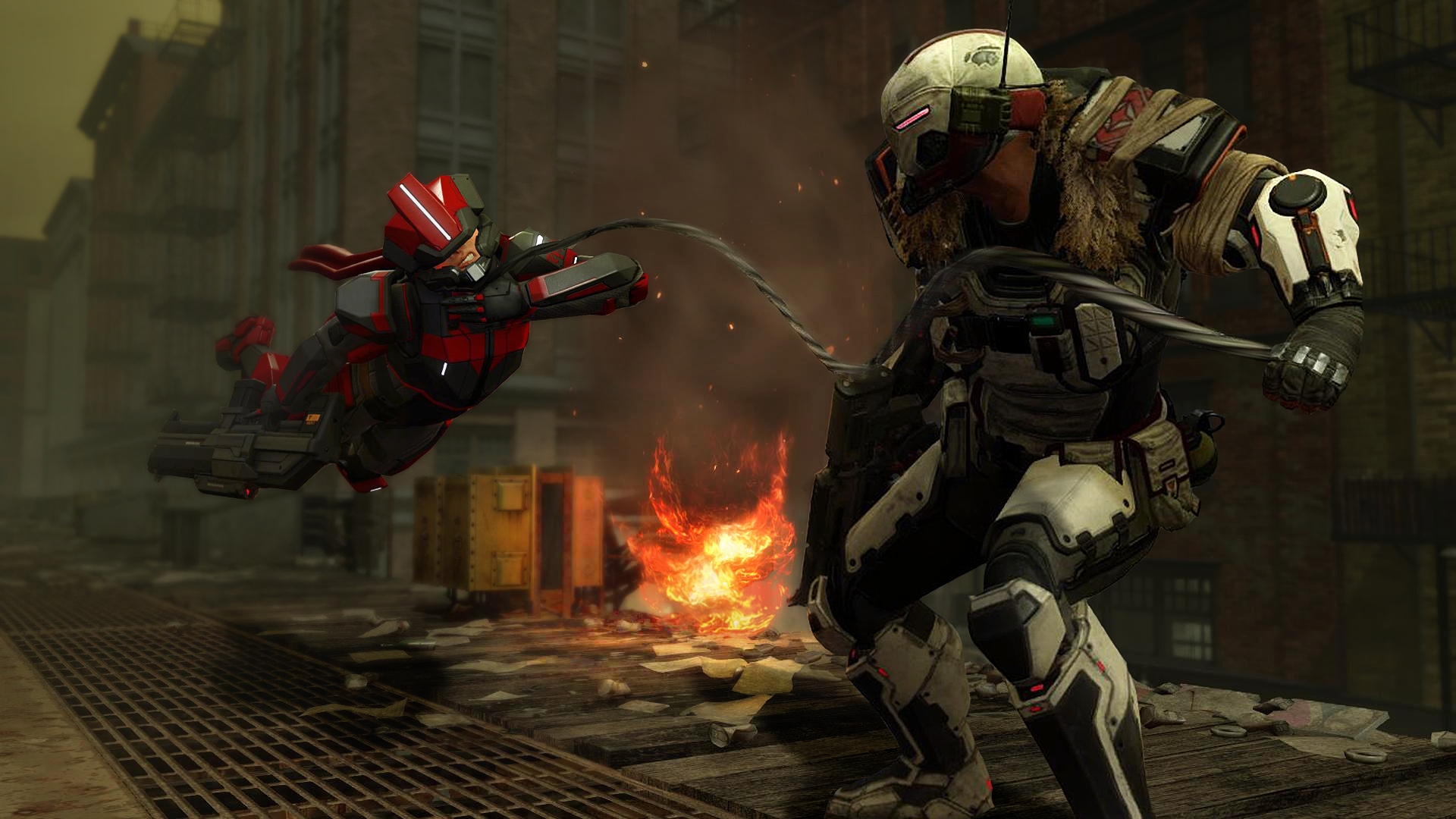
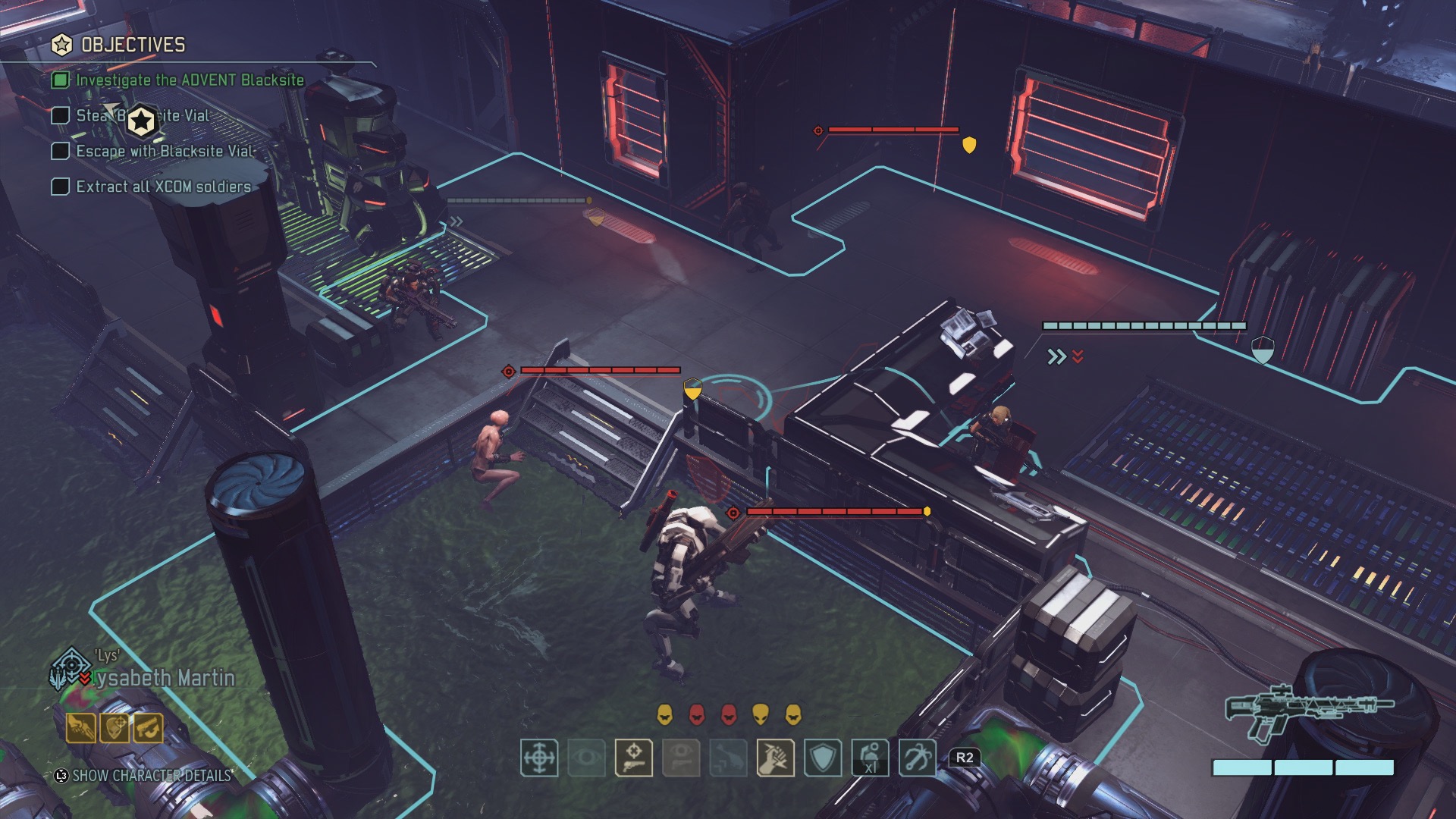
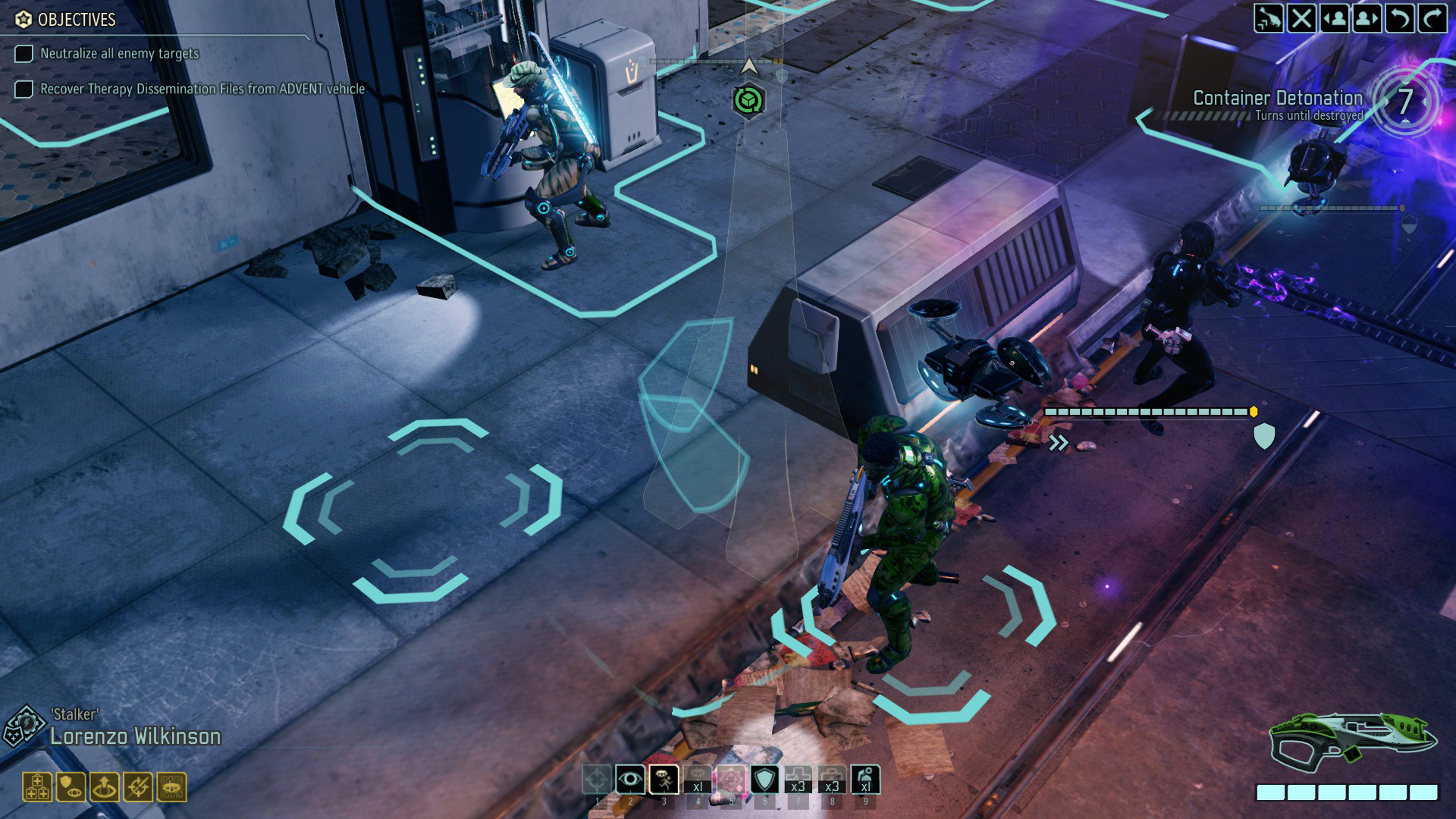

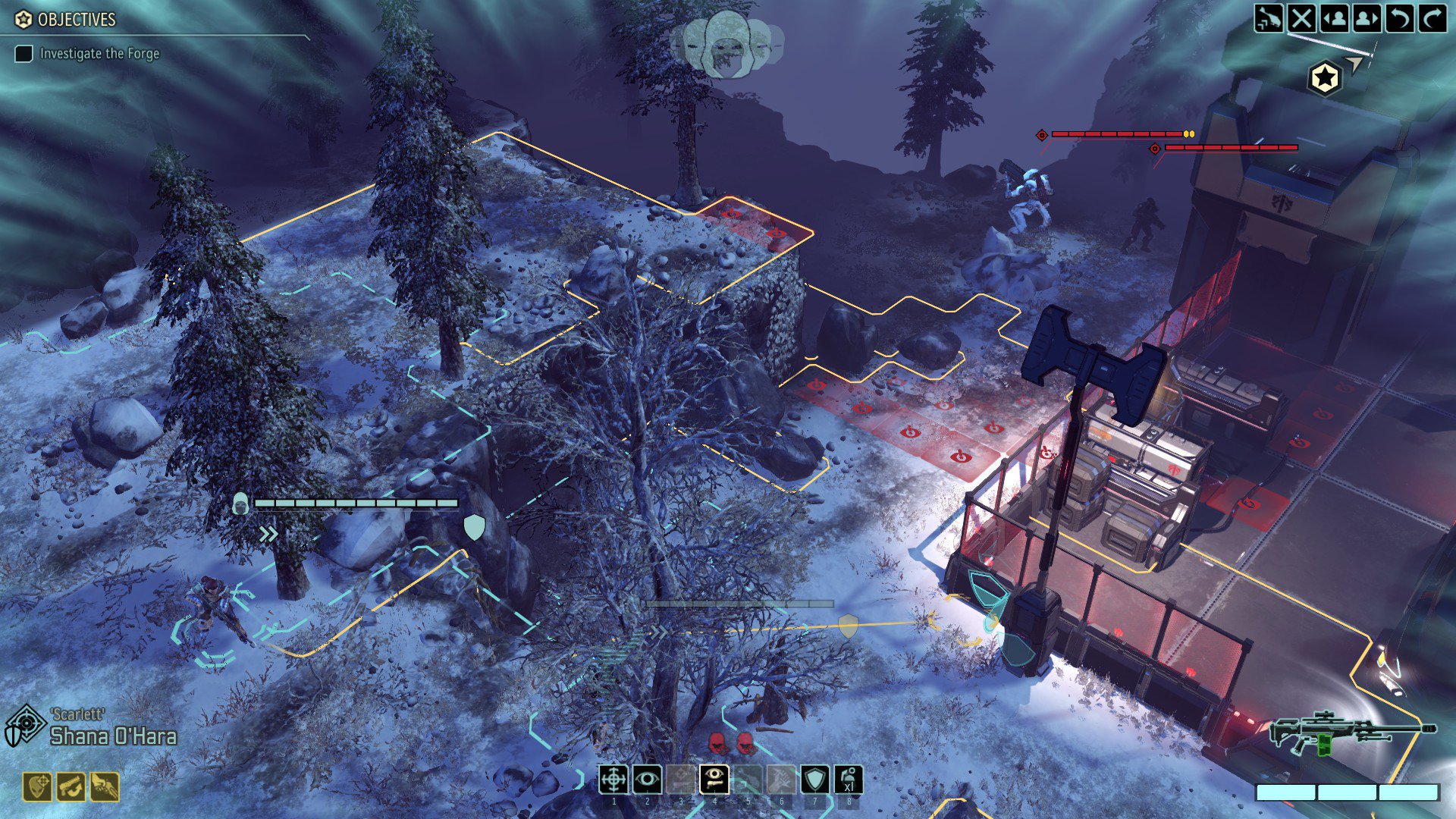
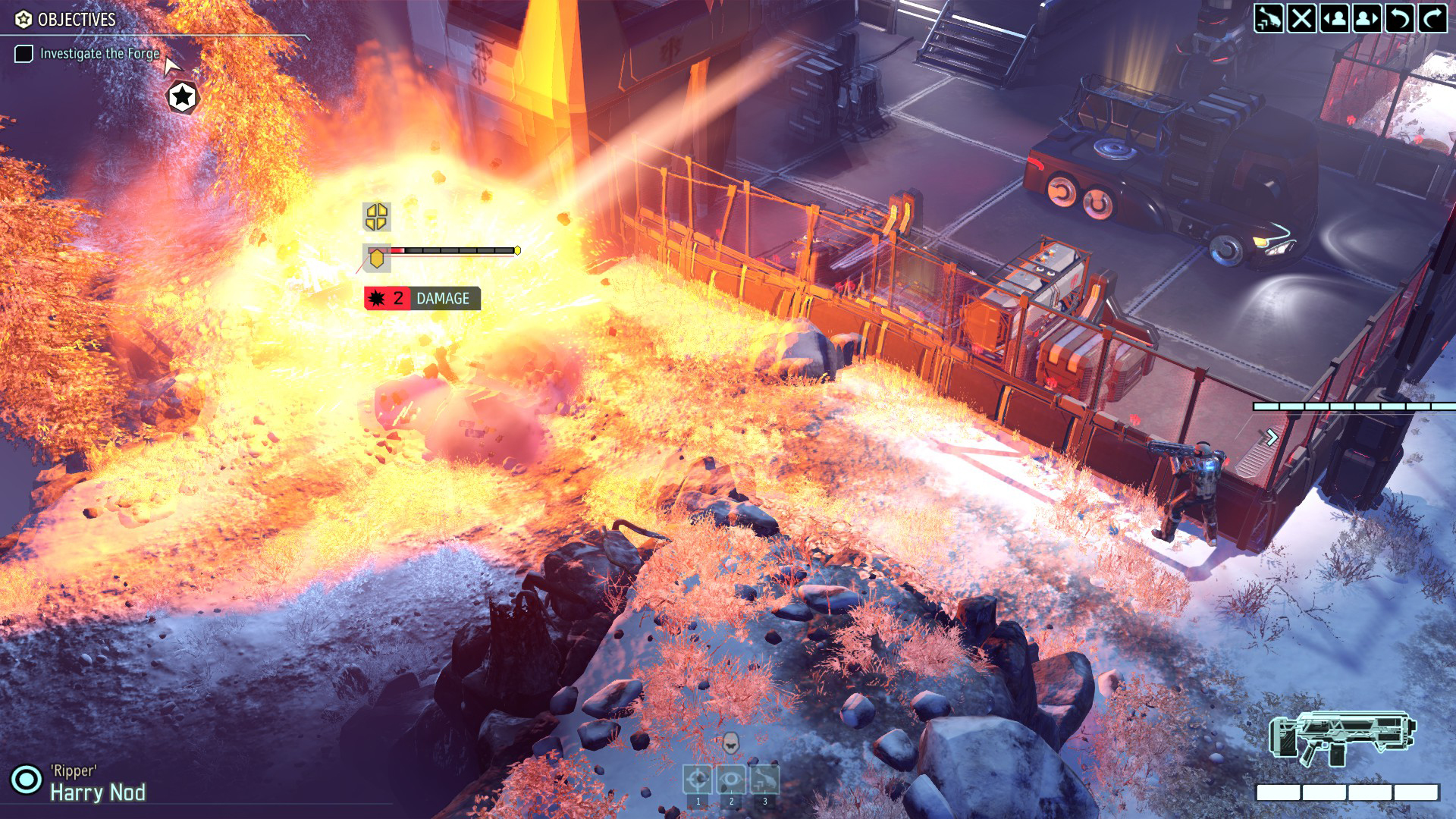

XCOM 2

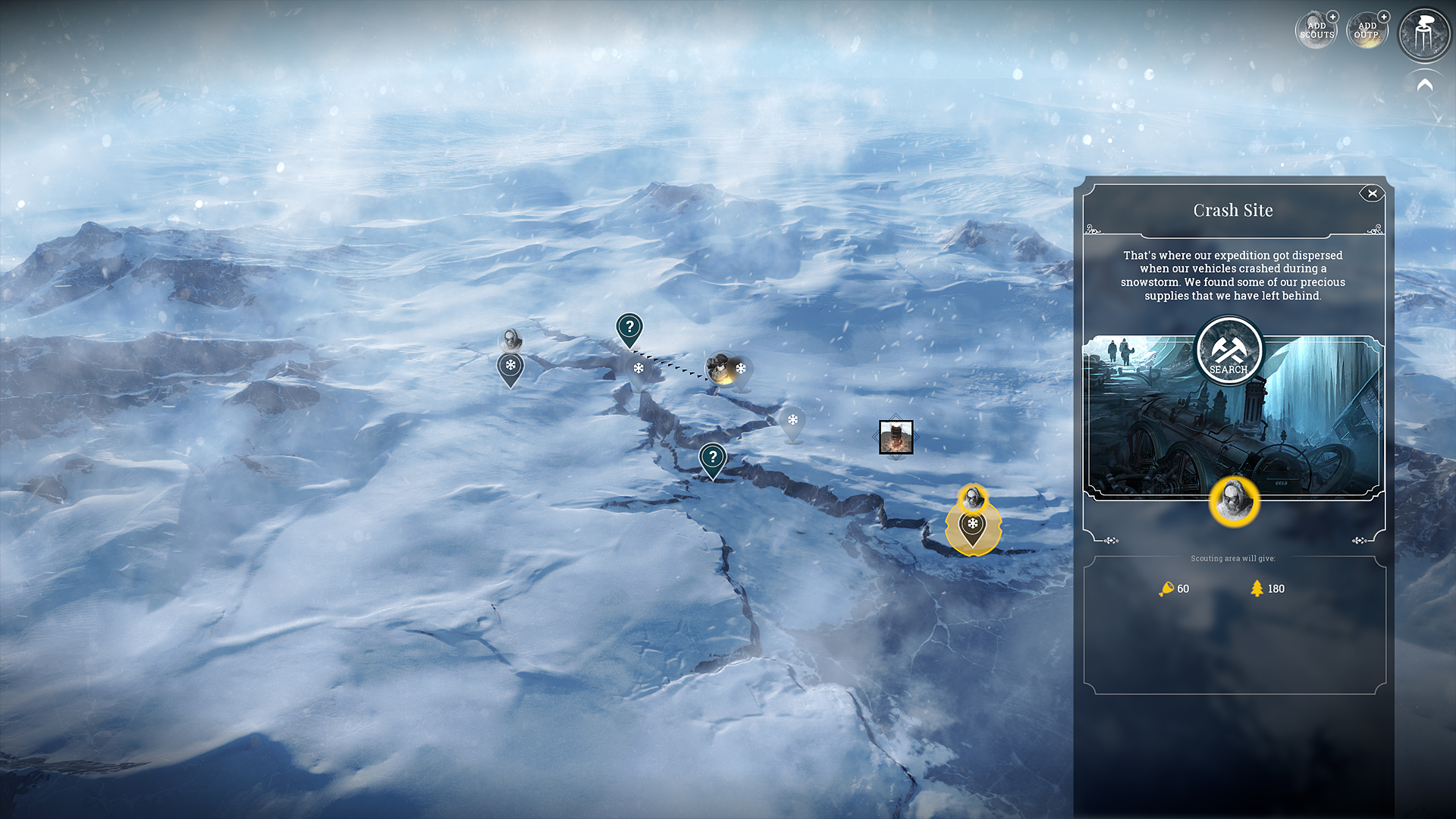
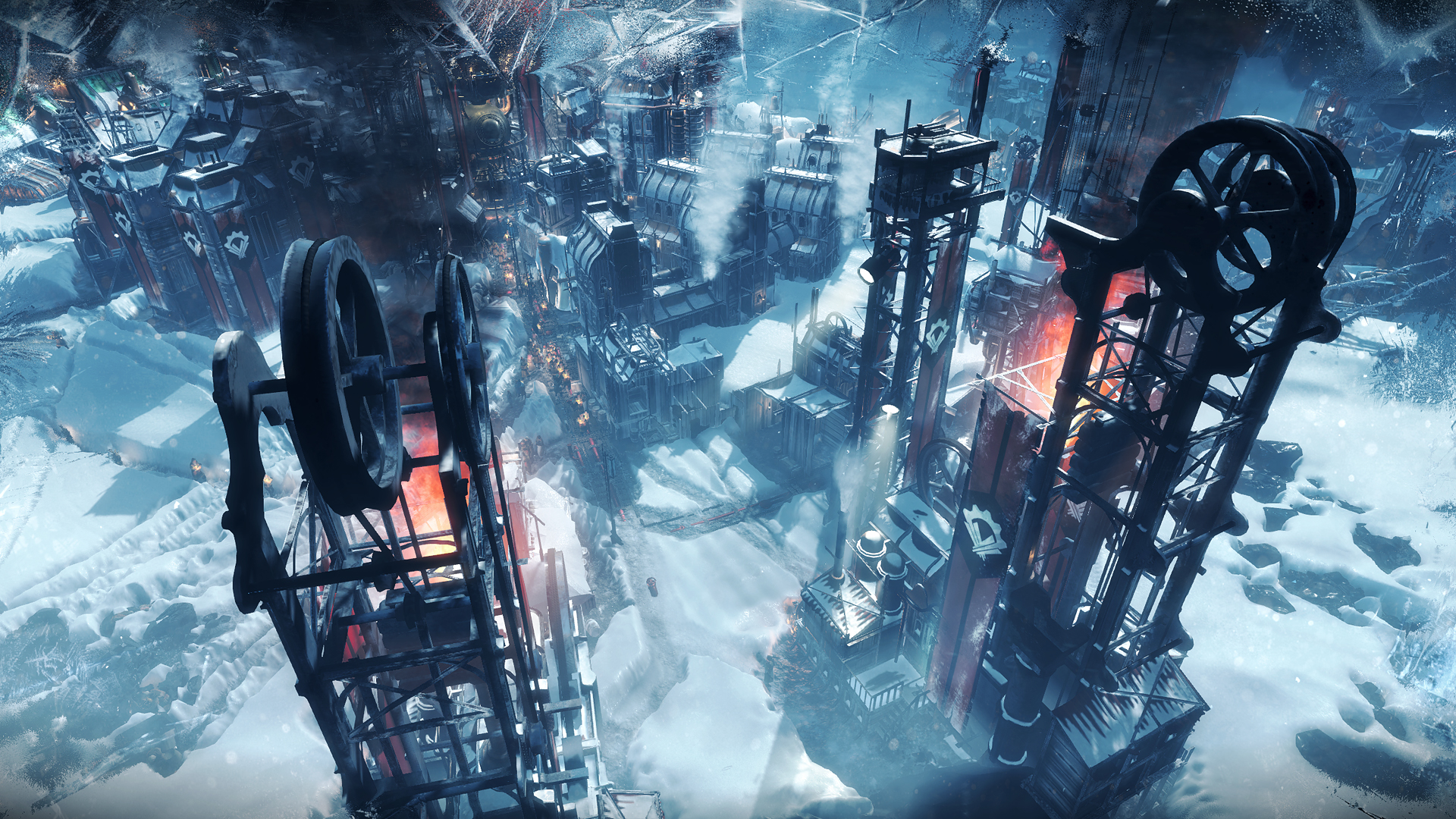


Frostpunk




Command & Conquer: Red Alert

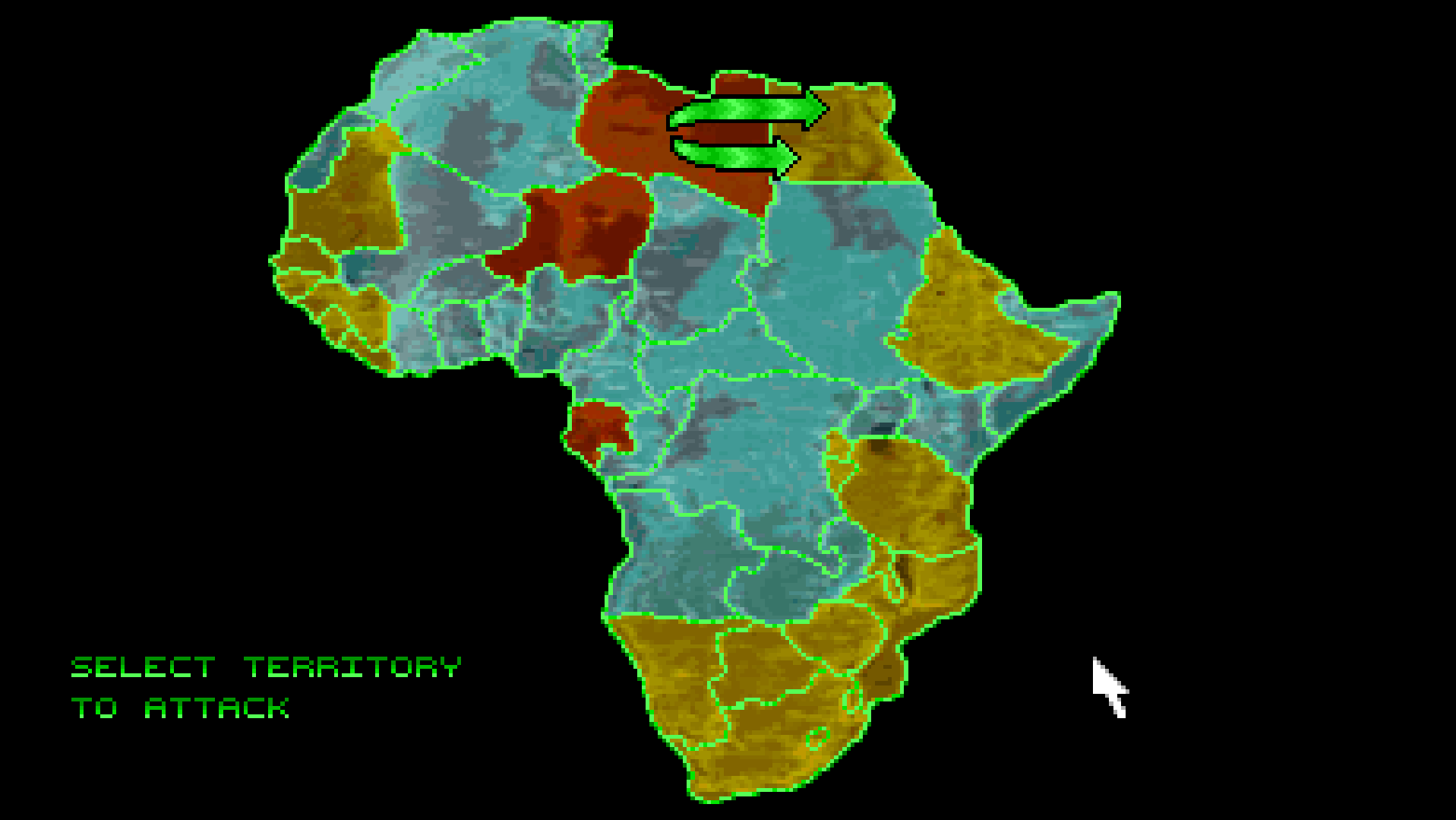
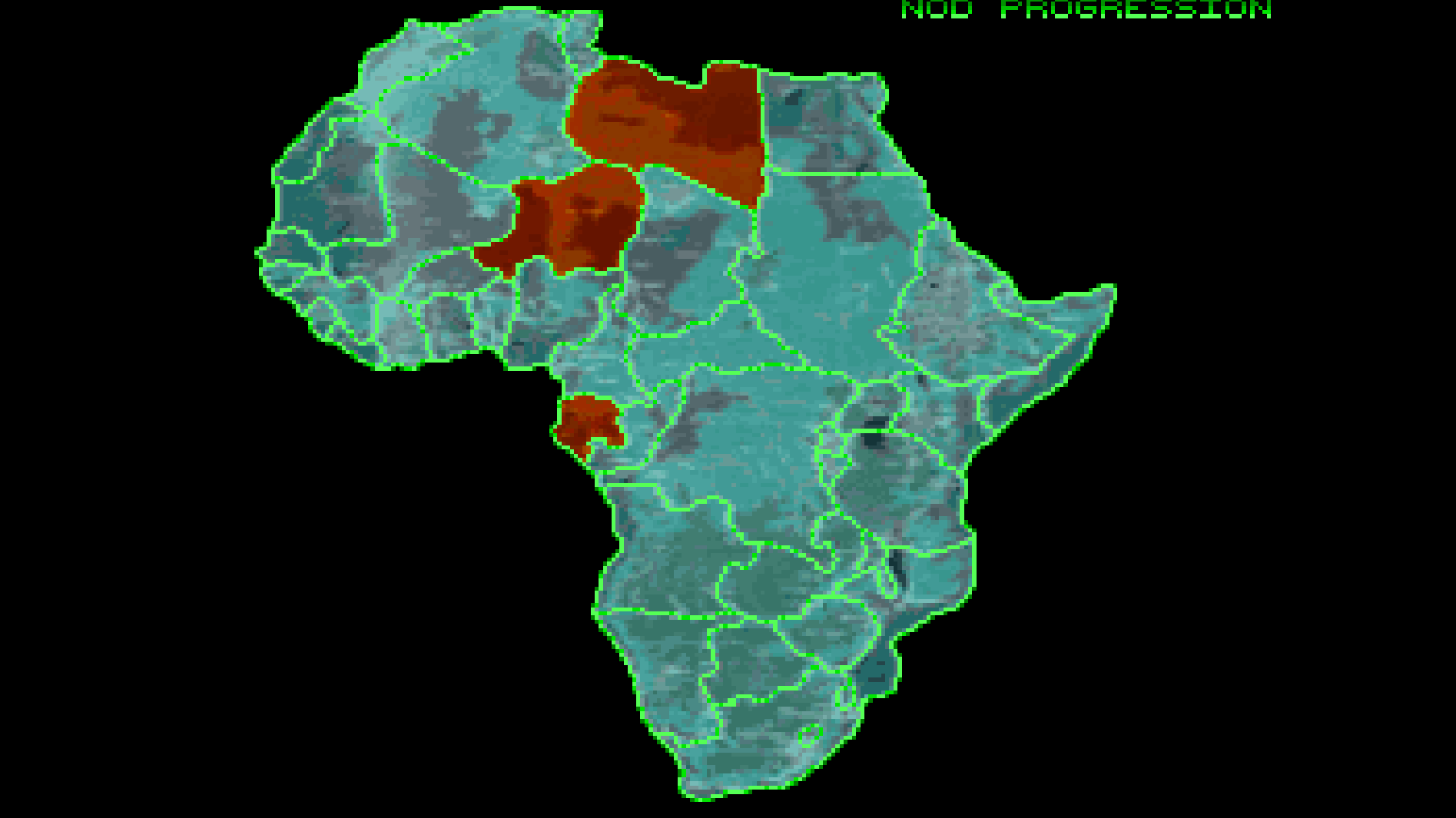
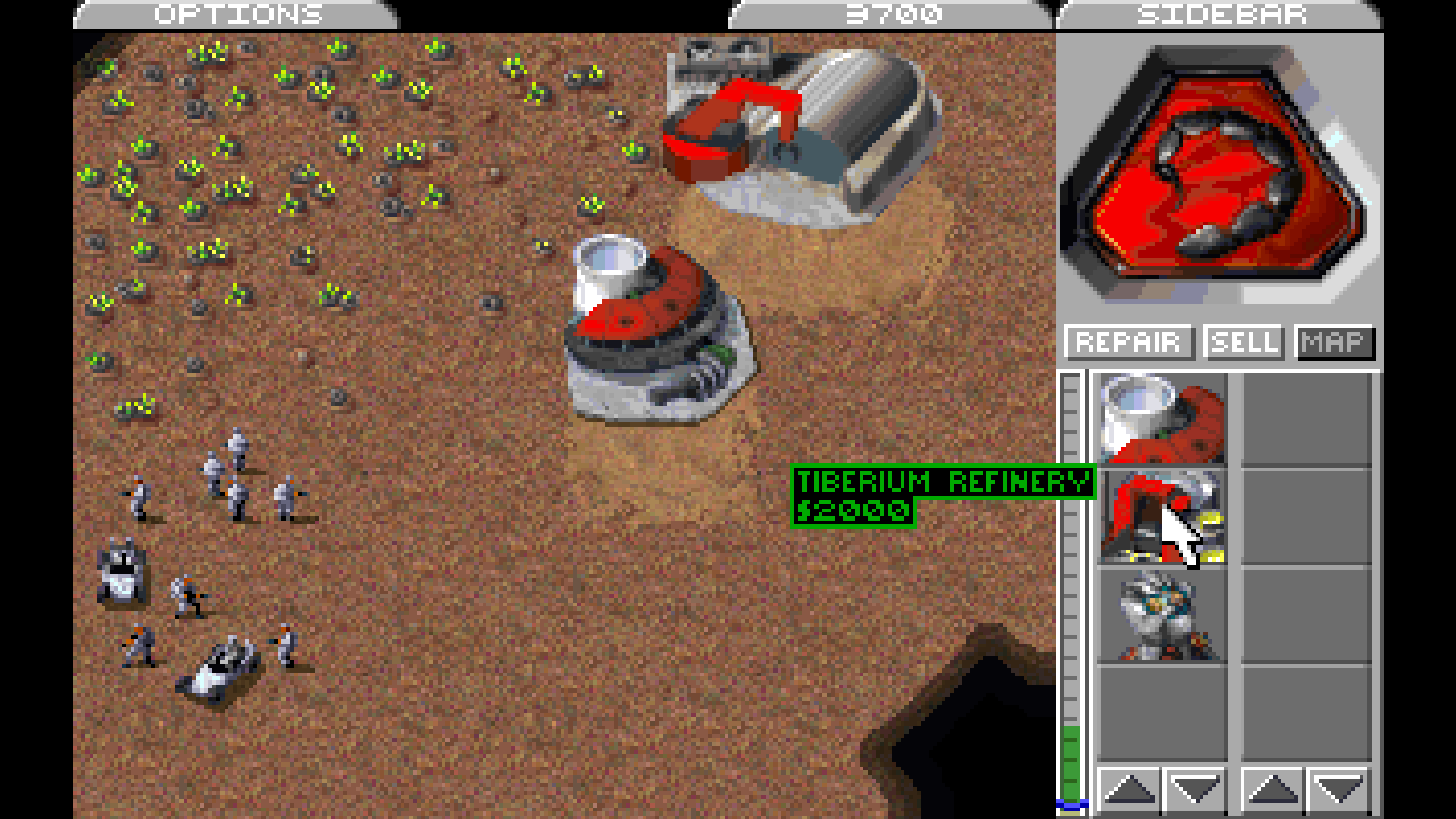
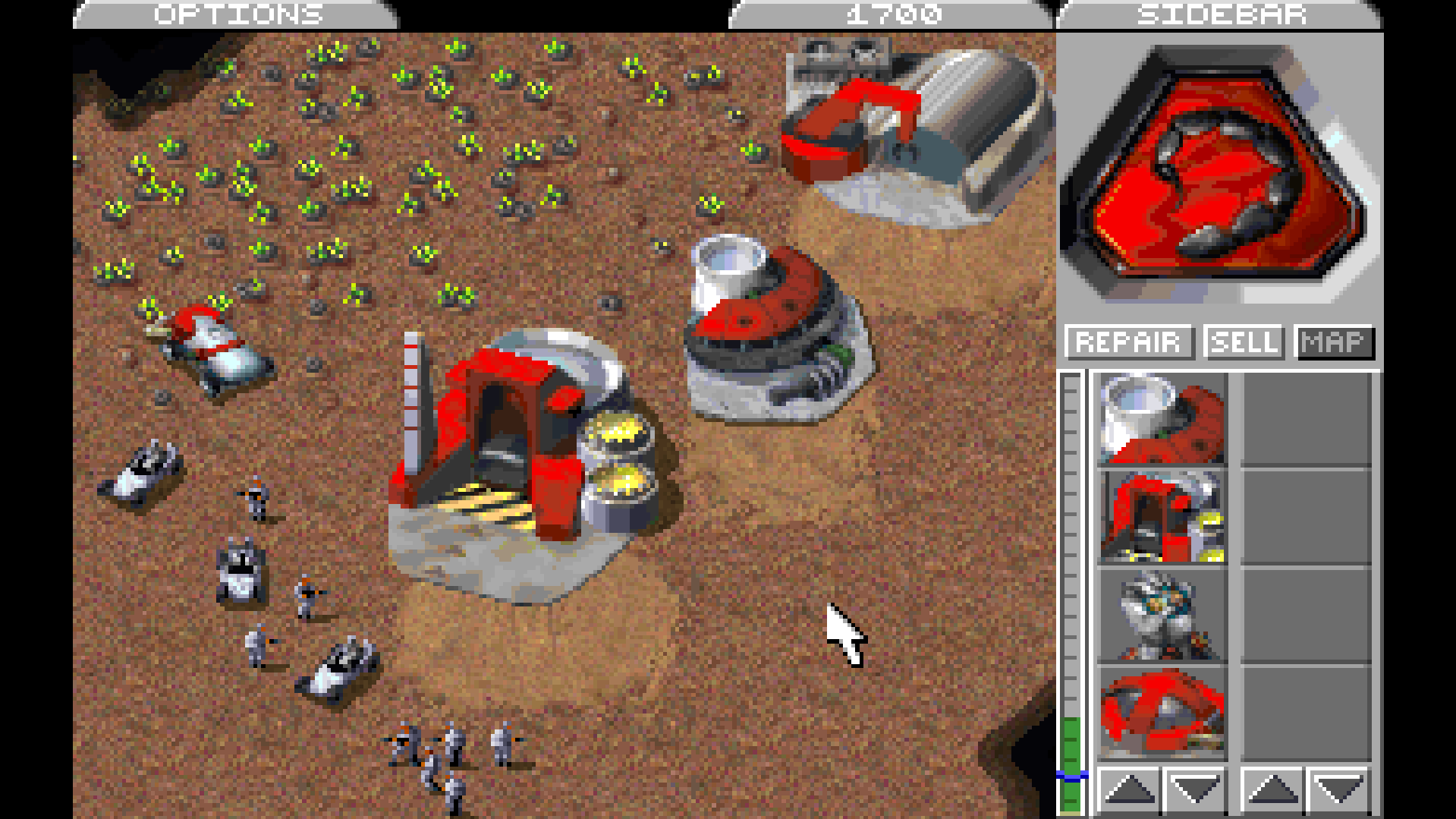
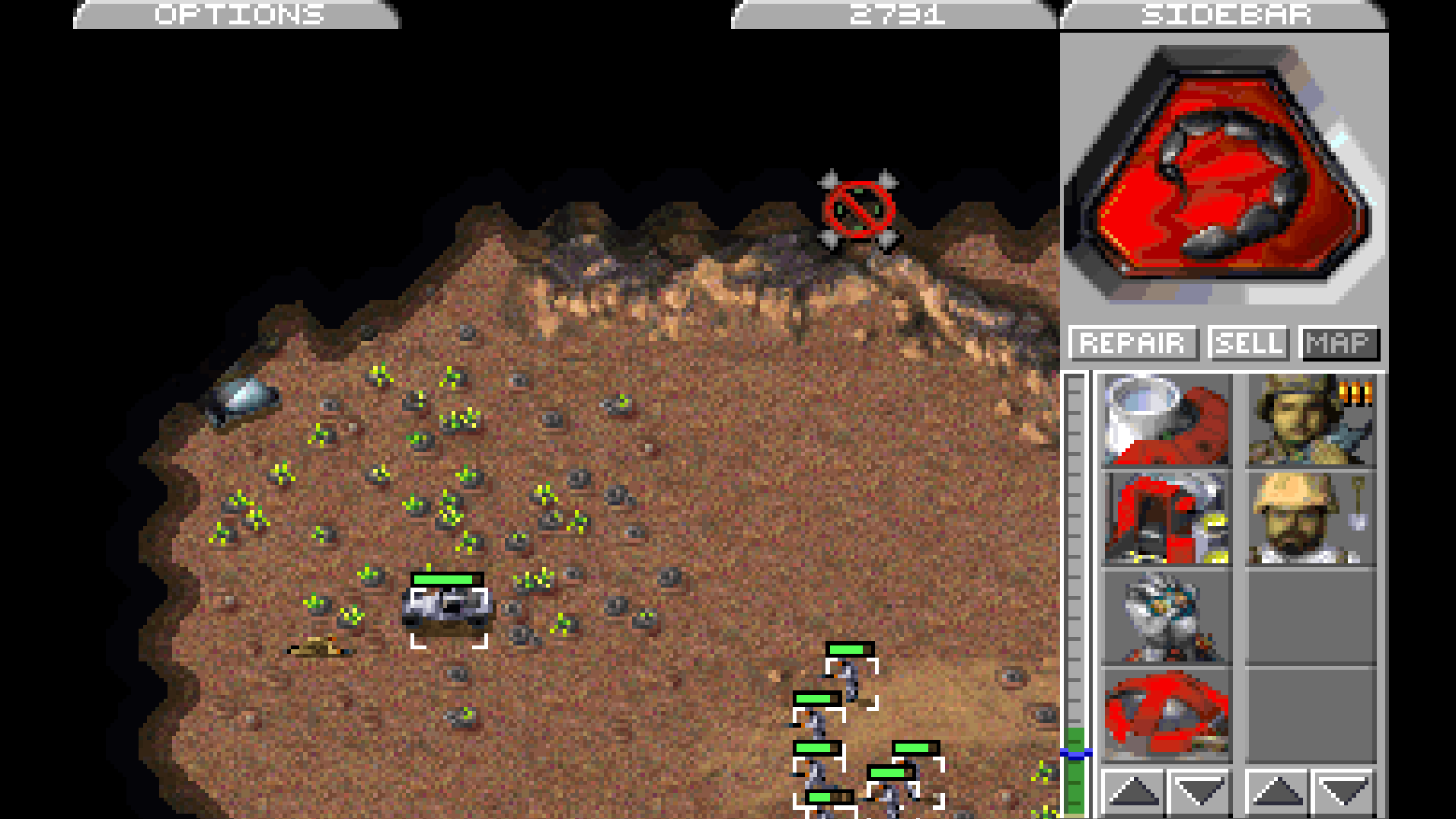
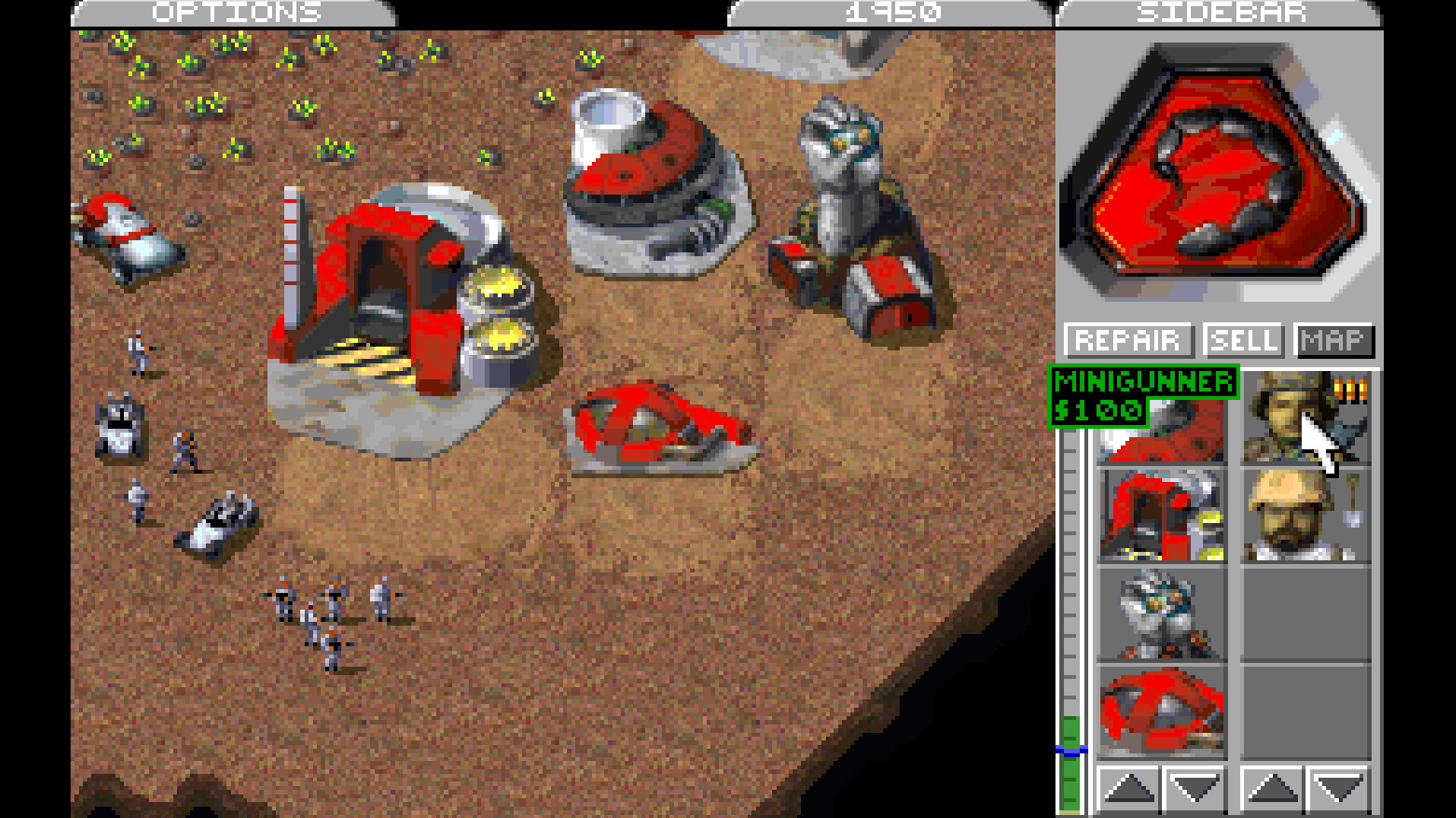
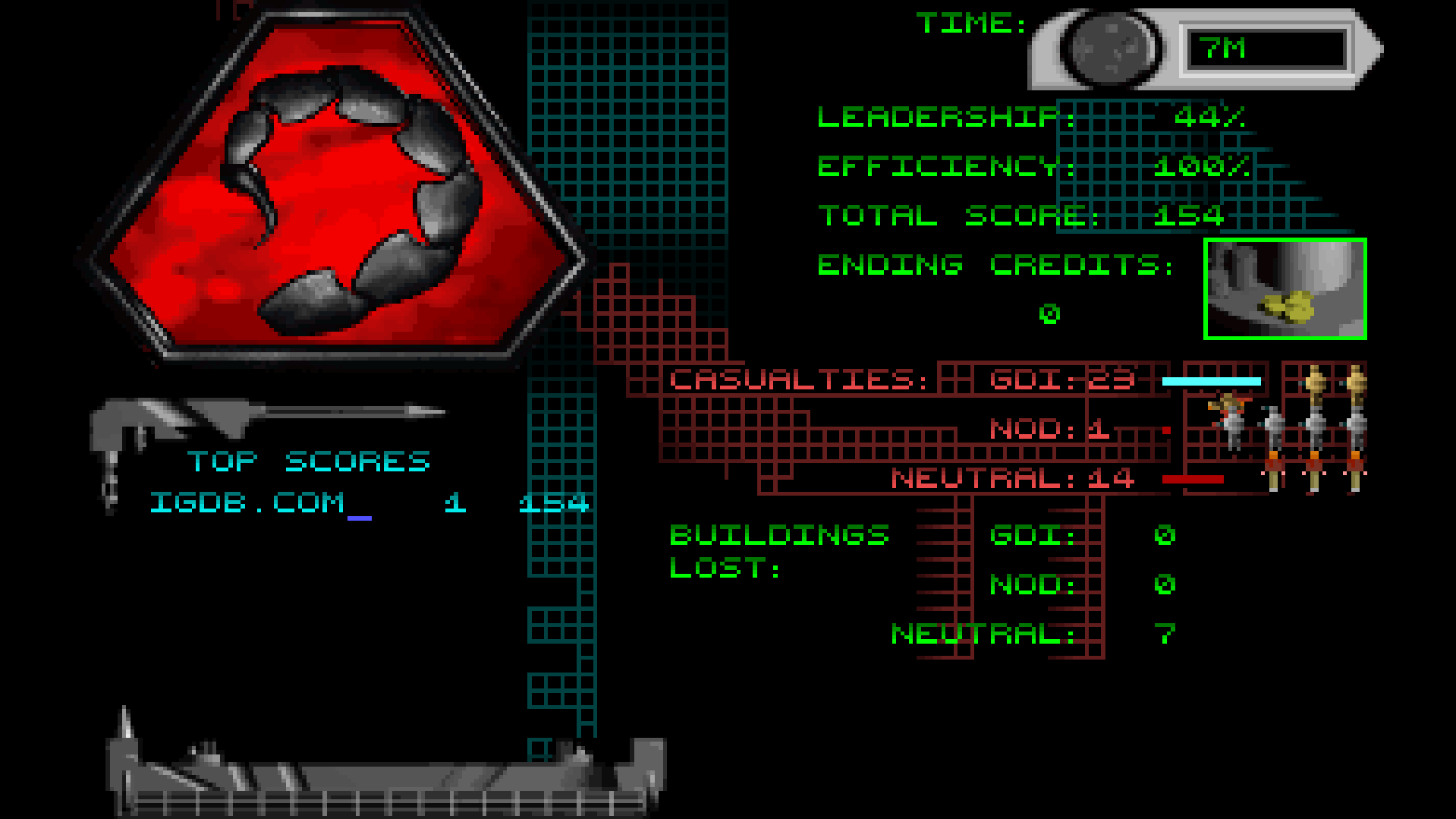

Command & Conquer